Delaying osteoporosis treatment is a safe option only when two things are true: your fracture risk is genuinely low, and the waiting is active. Physicians reasonably wait on medication for osteopenia with a FRAX score below the U.S. thresholds (20 percent ten-year major fracture risk, 3 percent hip), no prior fragility fracture, and no secondary cause such as steroid use. Waiting is risky when your T-score is -2.5 or below, you have already broken a bone from a fall at standing height, or you take glucocorticoids. In every case, active waiting must include mechanical loading, protein, vitamin D, balance training, and a follow-up DEXA with a date attached. Passive waiting is simply bone loss with a chart note. At OsteoStrong Austin and Georgetown, osteogenic loading is the piece of the plan that changes the trend while you and your physician watch it.
What "delaying treatment" usually means
When a physician says "let's watch it," they usually mean one specific thing: no prescription yet, and a repeat DEXA in 12 to 24 months to see which way the numbers move. This is called watchful waiting, and for the right patient it is a sound strategy.
The trouble is that the word "treatment" hides a lot. Most women hear it as medication, so "delaying treatment" sounds like "delaying the pill." In practice it too often becomes delaying everything: no loading, no change in protein or vitamin D, no balance work, and a scan that quietly slips from 24 months to 36. That version has a different name. It is bone loss with a chart note.
If your physician has recommended starting medication now and you are weighing that, our guide on starting osteoporosis medication right after diagnosis covers that decision. If you want the long view of what untreated loss does over years, read what happens if you don't treat osteoporosis. This article is about the middle case: when waiting is reasonable, when it is not, and what makes the difference.
When is delaying osteoporosis treatment a reasonable option?
Physicians reasonably hold off on medication when the evidence says your near-term fracture risk is low. That usually means all of the following:
- Osteopenia, not osteoporosis. A T-score between -1.0 and -2.5 at your lowest site, by the WHO definition.
- FRAX below the U.S. treatment thresholds. BHOF guidance points to a 10-year major osteoporotic fracture risk under 20 percent and a hip fracture risk under 3 percent. We explained the calculator in lowering your FRAX fracture risk.
- No prior fragility fracture. No wrist, spine, or hip broken from a fall at standing height or less.
- No secondary cause driving the loss. Thyroid, parathyroid, vitamin D, kidney function, and celiac screening have come back clean, and you are not on long-term steroids.
- A stable or slowly changing trend, if you have a prior scan to compare.
Meet all five and a physician can reasonably say: no medication yet, let's rescan in two years. That decision is not a finding that your bones are fine. It is a judgment that near-term fracture risk is low enough that the medication's side effects are not yet worth it. The bone loss itself is still on the table.
When waiting becomes risky
The same decision flips when any of these are present:
- A T-score of -2.5 or below at any site. That is osteoporosis, and the treatment conversation should start now rather than after another scan.
- A prior fragility fracture. A first fracture is the strongest predictor of the next, and it moves you into the treatment conversation regardless of T-score.
- FRAX at or above 20 percent major or 3 percent hip. The risk math already crosses the threshold.
- Glucocorticoids. Prednisone and its relatives can drive rapid loss, and physicians usually treat rather than watch.
- A steep drop between scans. If your last two DEXAs show a fast trend, waiting means watching it continue.
- A history of falls, or balance you no longer trust. A fall converts low density into a fracture, and waiting does nothing about the fall.
If you are in this group and your physician has still suggested waiting, ask why. There may be a good reason, such as a workup in progress or a planned dental procedure before a bisphosphonate. Make sure you hear it.
Passive waiting and active waiting are not the same thing
| Passive waiting | Active waiting | |
|---|---|---|
| Medication | Not yet | Not yet, by physician's decision |
| Mechanical loading | None, or walking only | Weekly loading above the bone-building threshold |
| Nutrition | Unchanged | Protein at every meal; calcium food-first; vitamin D tested and corrected |
| Balance | Unchanged | Reaction time and single-leg balance trained weekly |
| Follow-up DEXA | "Sometime in a couple of years" | Booked now, same machine, 12 to 24 months out |
| Decision rule | None | "If the scan shows X, we start medication" |
| Expected trend at the next scan | Same direction as the last one | Reversed, or at least flattened |
The rows are the same. Only the second column changes the outcome.
What does active waiting have to include?
If you and your physician have decided to hold off on medication, this is the plan that makes the wait worth something.
Mechanical loading. Bone adds density in response to strain above a threshold, a principle described by Wolff's law and Frost's mechanostat. The osteogenic loading literature associates that threshold with loads of roughly 4.2 times body weight (Deere et al., 2012). Walking and ordinary exercise do not reach it. Osteogenic loading reaches it safely, in your strongest range of motion, with a coach beside you.
Protein. Bone is built on a collagen framework, and most women over 50 under-eat the protein that supplies it. Our guide on how much protein you actually need to build bone has the practical targets.
Vitamin D and calcium. The NIH Office of Dietary Supplements sets vitamin D at 600 IU to age 70 and 800 IU after, with a tolerable upper limit of 4,000 IU, and many physicians target a 25-hydroxyvitamin D blood level of at least 30 ng/mL. Ask for the test. Calcium is 1,200 mg per day for women 51 and older, food first.
Balance and reaction time. About 1 in 3 adults over 65 falls each year, per the CDC. Training the reflex that catches a trip is the fastest way to lower fracture risk while density catches up. Our fall prevention and balance training program is built into every session.
A scheduled re-scan with a decision rule. Book the follow-up DEXA now, at the same imaging center, and ask your physician one question: what result at that scan would change the plan? We covered the interval and the same-machine rule in how often you need DEXA scans to monitor treatment.
The four-pillar version of this plan, with the physician's role spelled out, is on our osteoporosis treatment without medication page.
The cost of passive waiting
Two Austin members show what the two kinds of waiting look like on a DEXA report.
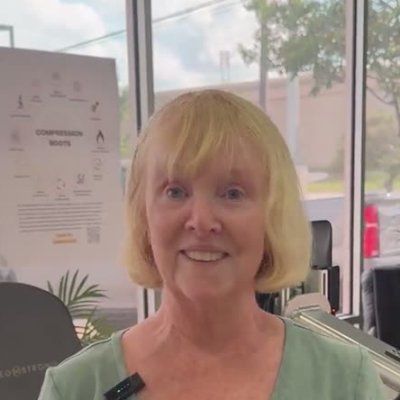
Bonnie: years of scans that only got worse
Every site improved on her follow-up DEXA after years of decline, femoral neck +8.7%
Bonnie, in her 60s, knew the rhythm of a passive wait: scan, worse news, repeat. Three years of weekly loading produced the first report that broke the pattern.
"Every time I've had it, it's always gotten worse. I couldn't believe it. Everything improved."
Verbatim from Bonnie's on-camera testimonial. Full case study.
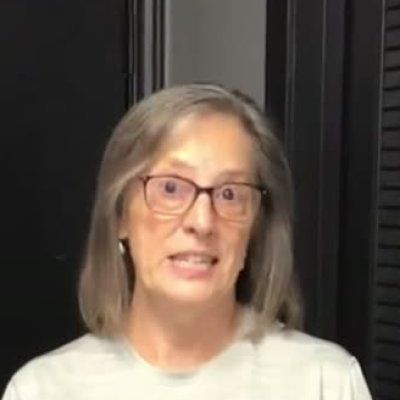
Marjorie: 15 years of doing everything right
DEXA normal at the spine and femoral neck after 18 months, following 15 years of osteopenia
Marjorie's wait was not passive. She lifted, walked, and went on hormone therapy. The missing piece was a load high enough to reach the threshold, and once it was there the trend turned inside 18 months.
"I was doing barbell weightlifting, walking a lot, doing the things you're supposed to do for bone density. I went on hormone therapy. None of it was making it stop."
Verbatim from Marjorie's on-camera testimonial. Full case study.
The scan two years from now reports whatever you did in the two years between. Passive waiting reports the same trend. Active waiting reports a different one.
What this looks like at OsteoStrong
Osteogenic loading fits inside a physician's watchful-waiting plan without changing anything the physician has decided. A session is about 15 minutes, once a week, on four devices, in street clothes, with a coach beside you. You press against each device in your strongest range of motion, and your force output is recorded every session, so you and your physician can see the stimulus rising months before the DEXA can. No impact, nothing to lift. Our session protocols are reviewed on an ongoing basis with the physicians who refer to us, and more than 100 Austin-area physicians do.
Among members who follow the weekly protocol and complete a follow-up DEXA, 8 out of 10 see measurable improvement. Consistency and starting point are the biggest factors, which is why we wrote OsteoStrong doesn't work if you don't show up. Member DEXAs are performed by independent imaging providers, not by OsteoStrong, and we encourage every member to rescan on schedule. The how it works page shows each device.
How to talk to your doctor about waiting
If waiting is on the table, these questions turn it into a plan:
- What is my T-score at my lowest site, and what is my FRAX?
- Have we ruled out secondary causes?
- What result at the next scan would change your recommendation?
- When is that scan, and can it be on the same machine?
- I am adding weekly osteogenic loading during the wait. Does that change anything?
The bottom line
Delaying osteoporosis treatment is safe only when fracture risk is genuinely low and the waiting is active. Osteopenia with a low FRAX, no fracture, and no secondary cause can reasonably wait on medication. Osteoporosis, a prior fracture, high FRAX, or steroid use cannot. In either case, the two years before the next scan are not neutral: bone is either getting a reason to build or it is not. Give it one, book the scan, and let the follow-up measure a change instead of a continuation.
Want to know where osteogenic loading fits in your plan? Book a free Bone Health Roadmap Call, bring your DEXA, and we will walk through it with you.
Full case studies referenced in this article
- Bonnie: every site improved after years of decline, femoral neck +8.7%
- Marjorie: normal DEXA after 15 years of osteopenia
Browse the full case studies hub or read the verification standard behind every number above.
This article is for general education and is not medical advice. Talk to your own doctor before starting, stopping, or changing any medication, supplement, or exercise program, especially if you have a diagnosis of osteopenia or osteoporosis.
Your simple plan from here
- Book your free Bone Health Call. 15 minutes, phone or Zoom, no pressure.
- Come in for a guided first session. A coach walks you through all four devices.
- Track your strength week after week. 15 minutes, once a week. The numbers rise.
Frequently asked questions
Is it safe to delay osteoporosis treatment?
It depends on what is being delayed and what you do in the meantime. Delaying medication can be reasonable for osteopenia with a low FRAX score, no prior fracture, and no secondary cause, as long as the waiting is active: weekly loading, adequate protein and vitamin D, balance work, and a scheduled follow-up DEXA. Delaying everything, with a T-score of -2.5 or below, a prior fragility fracture, or steroid use, is where waiting becomes risky.
What is watchful waiting for osteopenia?
Watchful waiting means your physician has decided not to prescribe medication yet and plans to rescan in 12 to 24 months to see which way the trend goes. It is a legitimate strategy when fracture risk is low. The word that matters is watchful: it should come with a scan date, a decision rule for what result triggers medication, and an active plan to change the trend before that scan, not just a note in the chart.
How long can you wait to treat osteoporosis?
There is no safe waiting period once you meet the definition of osteoporosis, because bone loss continues during the wait and a first fracture is the strongest predictor of the next one. If your T-score is -2.5 or below, or you have had a fragility fracture, the treatment conversation should start now, and whether it includes medication belongs to you and your physician. The non-drug plan can start the same week either way.
Can I do OsteoStrong instead of medication while I wait?
Many members do osteogenic loading during a physician-supervised waiting period, and more than 100 Austin-area physicians refer patients to us for exactly that. Whether it replaces or accompanies medication is your physician's call. What loading does in either case is supply the mechanical signal that bone needs to build, which medication does not provide. Among members who follow the weekly protocol and complete a follow-up DEXA, 8 out of 10 see measurable improvement.
What happens if you wait too long to treat osteoporosis?
Bone keeps thinning, which lowers the force it takes to break. The first fracture, often a wrist or a vertebra, sharply raises the odds of the next, and a hip fracture later in life can cost mobility and independence. Height loss and a rounded upper back can follow untreated vertebral fractures. None of this is inevitable, which is why the goal is a follow-up scan that shows the trend reversed. See what happens if you don't treat osteoporosis.
What should I do during watchful waiting?
Five things: mechanical loading above the bone-building threshold once a week, protein at every meal, vitamin D checked and corrected to your physician's target, balance and reaction-time training, and a follow-up DEXA already on the calendar at the same imaging center. Ask your physician which result at that scan would change the plan, so the wait has a finish line and a decision attached to it.