If you don't treat osteoporosis, bone loss continues without symptoms until a bone breaks. The first fragility fracture is the strongest predictor of the next, vertebral fractures stack into lost height and a stooped spine, and a hip fracture often means surgery, months of rehabilitation, and a permanent loss of independence. About 1 in 2 women over 50 will break a bone because of osteoporosis, according to the Bone Health & Osteoporosis Foundation, and about 1 in 3 adults over 65 falls each year, according to the CDC. Treating it does not only mean a prescription; it means an active plan that strengthens bone and trains balance. OsteoStrong is the non-pharmaceutical loading piece of that plan, alongside whatever your physician recommends.
If you don't treat osteoporosis, it does not hold still
The diagnosis arrives quietly. No pain, no limp, nothing that feels different from last year. That is the problem. Osteoporosis is a disease with no symptoms until the day it has a very loud one.
Bone is living tissue, constantly removed and rebuilt. After menopause the cells that remove bone outpace the cells that build it, and the balance stays tipped that way unless something changes it. Left alone, a site at -2.5 does not stay at -2.5. It drifts, a little each remodeling cycle, and the drift compounds the same way gains do.
This article is about what that trajectory looks like when nobody interrupts it, and about what "treat" actually means, because it means more than most people are told in the appointment. If your question is whether it is safe to wait, is delaying osteoporosis treatment safe takes that on directly.
The first fracture, and the cascade that follows
The Bone Health & Osteoporosis Foundation puts it plainly: about 1 in 2 women over 50 will break a bone because of osteoporosis. The break usually comes from a fall from standing height or less, the kind of fall that would have bruised you at 35.
What most people do not know is that the first fracture is not the main event. It is the warning shot. A fragility fracture is the strongest single predictor of the next one, which is why physicians treat it with urgency and why FRAX, the fracture-risk calculator, weights prior fracture so heavily. Vertebral fractures are the quiet ones: a compressed vertebra can pass for a bad back, and it shifts load onto its neighbors, which are made of the same weakened bone.
That is the fracture cascade. Breaking it requires two things that are often confused for one: bone strong enough to withstand a fall, and balance and reaction time good enough not to fall in the first place.
Height loss and the shape of your spine
Ask a woman what she fears about osteoporosis and she will say a hip. Ask what she has already noticed and she will say she is shorter.
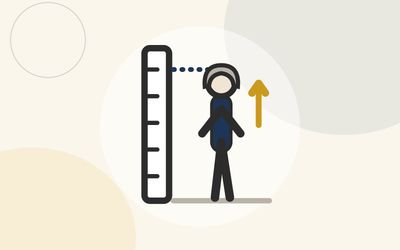
Vertebrae weakened by bone loss compress under ordinary load, sometimes without any event you would call an injury. Each one takes a little height. Several in a row tip the upper spine forward into kyphosis, the rounded posture that changes how clothes fit, how you breathe, and how you balance. A forward-tilted spine puts the center of mass ahead of the feet, which makes every trip more likely to end on the floor.
Height loss is also the one warning sign you can measure at home. If you have lost more than an inch or so from your peak height, that is a reason to ask your physician about a spine DEXA. Reversing height loss after 50 covers what is and is not recoverable.
What a hip fracture actually costs
A hip fracture is the outcome every osteoporosis plan is ultimately built to prevent, and the reason is not only the bone.
It nearly always means surgery, followed by weeks in rehabilitation and months of recovery. A meaningful share of people who fracture a hip never return to the independence they had before it: the house with stairs, the car, the trip to see grandchildren. Mortality in the year after a hip fracture rises well above what would be expected at the same age, and the reasons are mostly downstream: immobility, complications, loss of muscle.
Most hip fractures start with a fall. The CDC reports that about 1 in 3 adults over 65 falls each year. So the arithmetic of untreated osteoporosis is a fragile hip meeting a likely fall, and the plan has to address both halves. Fall prevention that actually works covers the second half.
The slow loss of independence
The dramatic version of untreated osteoporosis is a fracture. The common version is quieter, and it starts long before anything breaks.
It is the handrail you now reach for. The step stool you stopped using. The walk you shortened because the sidewalk near the park is uneven. Fear of falling shrinks a life one decision at a time, and the shrinking itself makes things worse, because less activity means less muscle, less balance, and less bone. Women describe getting "weaker, weaker, weaker" by the year, and they are not imagining it.
That trajectory can go a long way. It can also turn around from a long way down.
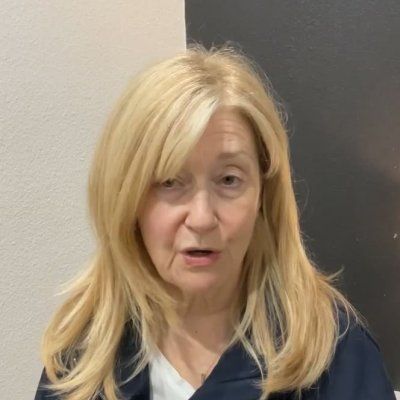
Virginia: a -4 T-score, four years in a wheelchair, now standing straight
Baseline DEXA T-score of -4; now walking unassisted and standing straight
Virginia came to our Austin center with a T-score of -4, far below the osteoporosis threshold, after four years in a wheelchair. Coach-supported loading, every week, for years, is what the road back looked like.
"Two years ago I had a negative four DEXA. I was in a wheelchair for four years. Today I'm standing up straight."
Verbatim from Virginia's on-camera testimonial. Full case study.
What does "treat" actually mean?
Here is the part that gets lost. "Treat" and "take a prescription" are not the same word.
Medication is the right call in specific situations: a prior fragility fracture, a T-score well below -2.5, a FRAX 10-year risk at or above 20% for a major fracture or 3% for hip fracture, or a secondary cause such as long-term steroids. In those cases a drug protects the bone you have on a timeline nothing else can match, and the decision belongs to you and your physician. If that drug is Prolia (denosumab), it must never be stopped without your physician's exit plan, because rebound bone loss and vertebral fractures are well documented when it is dropped. The osteoporosis medications guide explains each class.
But no medication supplies the input bone was designed to respond to, which is mechanical load. None of them builds the muscle that absorbs a fall or trains the reflex that prevents one. So an active plan, with or without a prescription, has five parts:
- Load the bone above its adaptation threshold. Wolff's law and Frost's mechanostat describe it: bone builds when strain crosses a set point, and the osteogenic loading literature cites loads above roughly 4.2 times body weight, after Deere and colleagues. Walking does not get there.
- Supply the raw materials. Protein at every meal, 1,200 mg of calcium a day from food first, and vitamin D at a level your physician is happy with.
- Train balance and reaction time, because the fall comes first.
- Take the medication if it is warranted, and know its exit plan.
- Re-scan on schedule, 12 to 24 months out, on the same machine, so the plan has a scoreboard.
The four-pillar non-drug osteoporosis plan walks through the first three in detail.
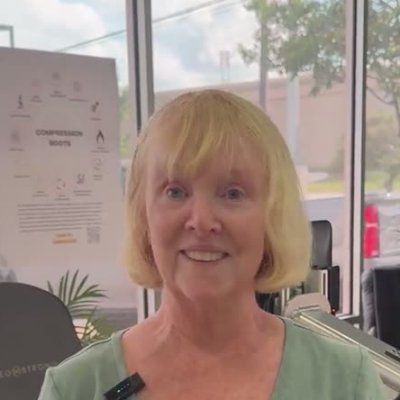
Bonnie: years of worse scans, then a scan where everything improved
Every site improved on follow-up DEXA after years of decline; femoral neck +8.7%
Bonnie's scan history was the untreated trajectory in miniature: every report worse than the last. Three years of weekly sessions later, the report came back different at every site.
"Every time I've had it, it's always gotten worse. I couldn't believe it. Everything improved."
Verbatim from Bonnie's on-camera testimonial. Full case study.
What treating it looks like at OsteoStrong
OsteoStrong is the loading piece. One session a week, about 15 minutes, four devices, a coach beside you, in street clothes, with no impact. Each device positions you in your strongest range of motion so you can safely produce force at the level bone responds to, and progresses in very small joint-angle increments so the stimulus keeps rising as you get stronger. Force output is measured every session; balance and reaction time are trained on the same visit.
Among members who follow the weekly protocol and complete a follow-up DEXA, 8 out of 10 see measurable improvement, with consistency and starting point the two factors that matter most. Every scan is performed by an independent imaging provider and read by the member's own physician. More than 100 Austin-area physicians refer patients to our Austin and Georgetown centers, and our session protocols are reviewed on an ongoing basis with them. It sits alongside your physician's plan, never instead of it. How it works shows each device.
The bottom line
What happens if you don't treat osteoporosis? The loss continues silently, the first fracture invites the second, the spine compresses and tilts, and a hip fracture can take the independence that everything else in your life depends on. None of that is inevitable, because bone adapts to load at any age and balance is trainable at any age. "Treat" means an active plan, with medication when your physician says it is warranted and mechanical loading, nutrition, balance work, and a scheduled re-scan in every case. The women who turned their scans around did not wait for the loud symptom. They started while it was still quiet.
Want to know where your trajectory is headed, and how to change it? Book a free Bone Health Roadmap Call, bring your DEXA, and we will walk through it with you.
Full case studies referenced in this article
- Virginia: from four years in a wheelchair to walking unassisted
- Bonnie: every site improved after years of decline, femoral neck +8.7%
Browse the full case studies hub or read the verification standard behind every number above.
This article is for general education and is not medical advice. Talk to your own doctor before starting, stopping, or changing any medication, supplement, or exercise program, especially if you have a diagnosis of osteopenia or osteoporosis.
Your simple plan from here
- Book your free Bone Health Call. 15 minutes, phone or Zoom, no pressure.
- Come in for a guided first session. A coach walks you through all four devices.
- Track your strength week after week. 15 minutes, once a week. The numbers rise.
Frequently asked questions
What happens if you don't treat osteoporosis?
Bone loss continues, silently, until a bone breaks. The first fragility fracture is the strongest predictor of the next, vertebral fractures stack into height loss and a stooped posture, and a hip fracture often means surgery, months of rehab, and a permanent loss of independence. About 1 in 2 women over 50 will break a bone because of osteoporosis, according to the Bone Health & Osteoporosis Foundation. Treating it means an active plan for bone and balance, whether or not medication is part of it.
Can osteoporosis get worse without you knowing?
Yes. Osteoporosis has no symptoms until something breaks, and even then a vertebral compression fracture can pass for a bad back. That is why the diagnosis so often arrives late, after a wrist or hip fracture, and why the U.S. Preventive Services Task Force recommends DEXA screening for all women at 65, earlier with risk factors. Between scans, the only warning signs are indirect: lost height, a rounding upper back, or a fall that scared you.
What is the fracture cascade?
The pattern in which one fragility fracture makes the next more likely. A first vertebral fracture shifts load onto the vertebrae around it, a wrist fracture signals that bone is already fragile, and each fall that ends in a break raises the odds of another. Physicians treat a first fragility fracture as an urgent signal because the cascade accelerates. Breaking it requires stronger bone and fewer falls, which are two different jobs.
How does osteoporosis cause height loss?
Vertebrae weakened by bone loss can compress under ordinary load, often without a distinct injury. Each compressed vertebra takes a little height, and several in a row tilt the spine forward into the rounded posture called kyphosis. That posture then loads the remaining vertebrae unevenly and makes balance harder. Height loss of more than an inch or so since your peak is a reason to ask your physician about a spine DEXA. See reversing height loss after 50.
Is a hip fracture really that serious?
Yes. A hip fracture almost always means surgery and a long rehabilitation, and a meaningful share of people never return to the level of independence they had before it. About 1 in 3 adults over 65 falls each year, according to the CDC, and a fall onto an osteoporotic hip is how most hip fractures happen. Preventing it means both stronger bone and trained balance and reaction time, which is why a complete plan addresses both.
Does treating osteoporosis mean I have to take medication?
Not necessarily, and that decision belongs to you and your physician. Medication is usually recommended after a fragility fracture, at a T-score well below -2.5, at a high FRAX score, or when a secondary cause is driving loss. Treating osteoporosis always means an active plan: mechanical loading strong enough to make bone adapt, protein, vitamin D, balance training, and a scheduled follow-up DEXA. OsteoStrong is the non-pharmaceutical loading piece of that plan and works alongside any prescription.