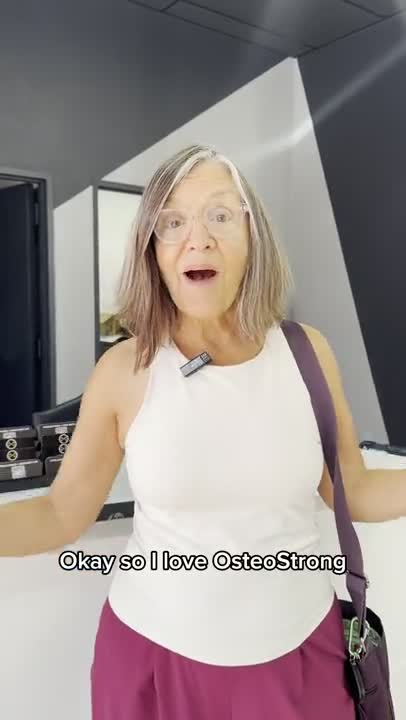
Does OsteoStrong work? For members who show up weekly and follow the system, we see exactly what the research predicts: measurable force gains between DEXA scans, better balance scores over time, and bone density improvement for many who stick with the protocol. It does not work if you treat it like an optional add-on you only use when you feel motivated. Bone density and balance do not care about intentions. They care about consistent stimulus.
There is a quiet truth most people do not want to hear.
It is not flashy. It does not compress into a 30-second ad. It does not promise transformation without effort.
But it is the line that separates people who get results from people who keep searching.
OsteoStrong does not work if you do not show up.
The lie most people are sold
We have all seen the pattern.
- “Do this one thing.”
- “Take this pill.”
- “Follow this hack.”
And suddenly, everything changes.
That story sells hope without asking for ownership.
Your body does not work that way. Bone density does not improve because you meant to come in. Balance does not fix itself because you planned to start. Strength does not grow from good intentions alone.
Your body responds to consistent stimulus: the same weekly signal, repeated long enough for remodeling to catch up.
What makes OsteoStrong different (and why the system matters)
At OsteoStrong we are not running random workouts.
We use a precise, once-per-week approach designed to deliver a stimulus your bones and muscles can actually adapt to:
- High-force, low-impact loading (osteogenic-range compression without the joint punishment of repeated jumping)
- Coach-guided sessions, not guesswork on machines you have never seen
- Measured progress (force output, grip, balance numbers), not only “how you felt today”
That is the bone density improvement program in practice: signal, recovery, repeat.
Here is the part many people miss: the system only works if you respect the system. Skip the rhythm, and you dilute the stimulus. Dilute the stimulus long enough, and you are back to hoping instead of building.
If you want the full research picture, read the science of osteogenic loading in plain English.
The members who win
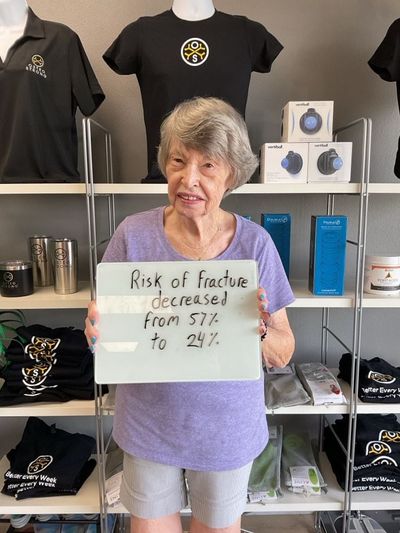
They are not always the youngest. They are not always the most athletic. They are not always fired up on day one.
They do one thing differently: they show up.
Week after week.
- When it is inconvenient.
- When they do not feel like it.
- When progress feels slow.
Something predictable happens.
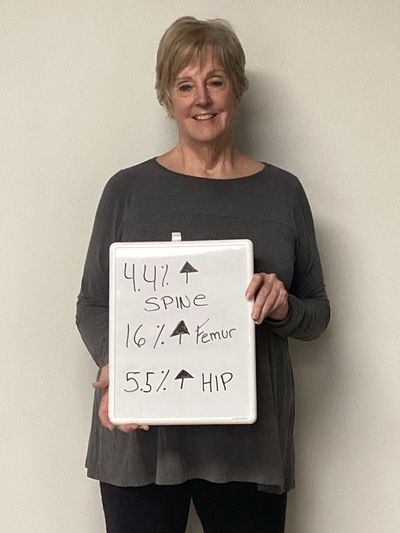
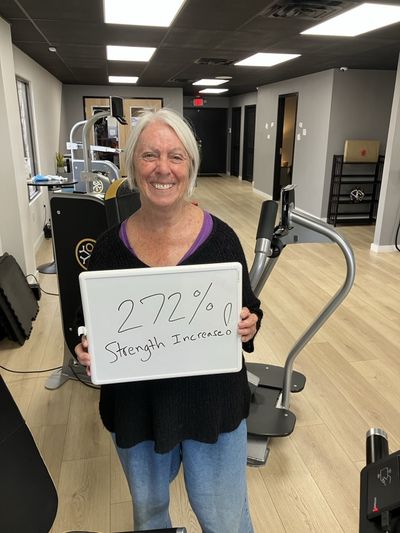
At first, the numbers move (force on the devices, balance scores on the plate). Then posture and everyday confidence shift. Then life feels a little wider: stairs, travel, grandchildren, the stuff you stopped trusting yourself to do.
Not because of one dramatic moment, but because dozens of small, consistent visits stack.
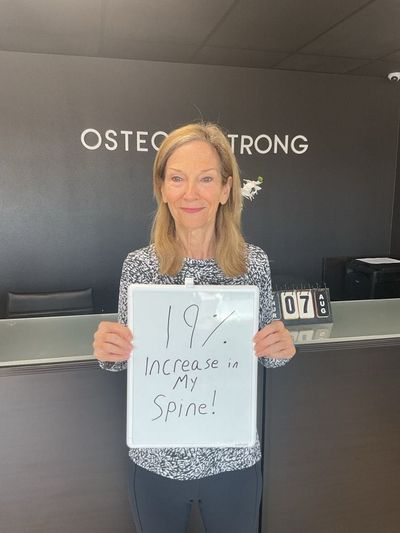
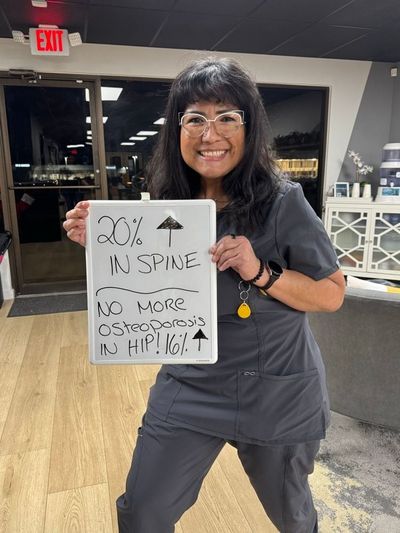
That is what a 15-minute OsteoStrong session is designed to support: a repeatable visit you can actually keep on the calendar.
Why consistency beats intensity
Inside our centers we are not chasing max effort every single session.
We follow progression: controlled increases, measured pushes, and coaching that builds over time.
We want slow, steady growth over time, preparing the body to take on load safely.
Going too hard too fast does not win long term. It breaks people. And broken people stop coming back.
Consistency beats intensity for bone health and for habits you will still be doing a year from now.
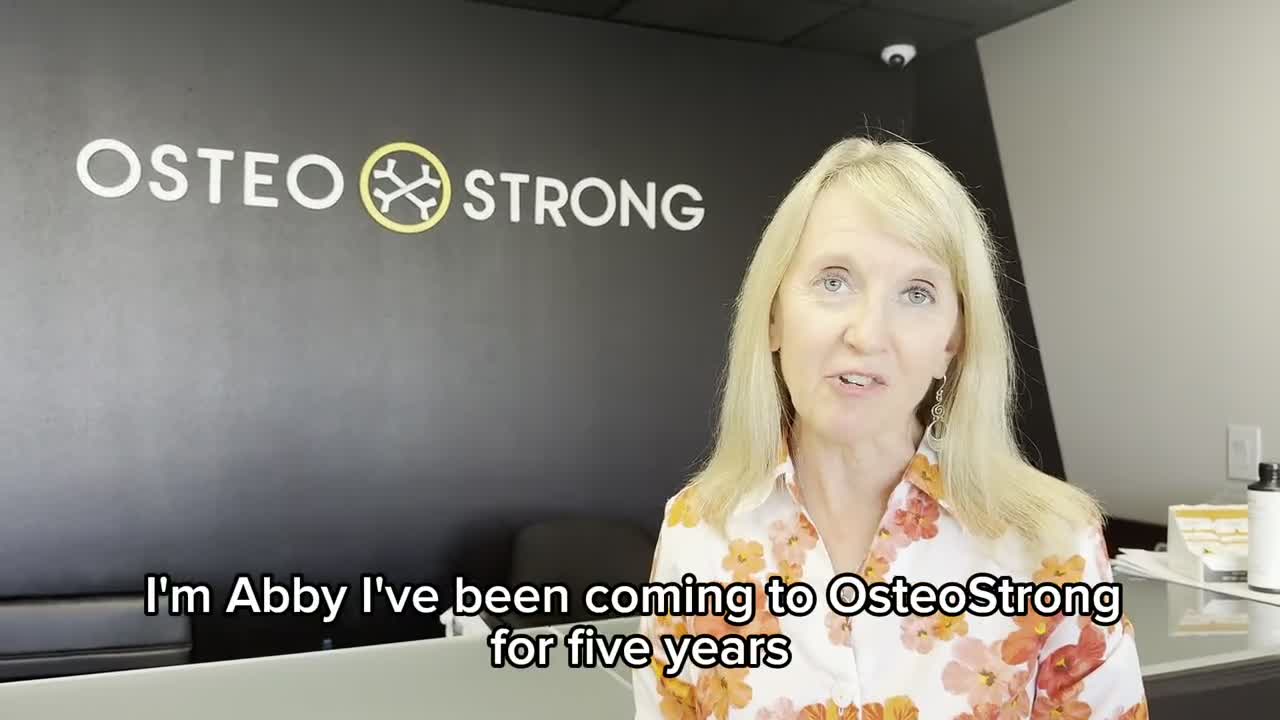
If it is once a week, why do people stay for years?
Fair question.
Two reasons:
- They like how it fits their life. Simple, guided, purposeful. No locker room. No hour on a treadmill. About 15 minutes, once a week, with a coach beside you.
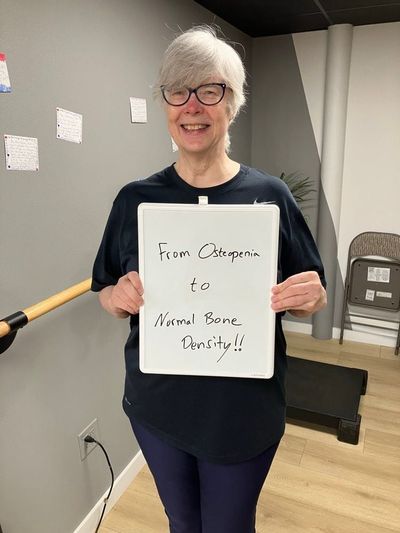
- Bone does not rebuild overnight. Many members are reversing decades of slow loss. That is not a six-week transformation. It is rebuilding a foundation the body has not had in years.
Starting later is still worthwhile. If you are asking whether it is too late, read starting OsteoStrong at 60, 70, or 80.
What happens if you do not show up
Nothing dramatic at first.
That is the danger.
No alarm bells. No immediate pain.
Just a slow drift:
- Slightly less loading stimulus for bone
- Slightly less practice for balance and reflexes
- Slightly higher long-term fracture risk when years of “I will go next week” stack up
Until one day it is not slight anymore, and you are reacting instead of building.
If you want a blunt look at what is at stake when bone loss goes unaddressed, read reversing osteoporosis: what women over 50 actually accomplish with verified DEXA context.
We are not for everyone
If you want fast, easy, and optional, this is not it.
If you want stronger bones, better balance, and real strength that carries into daily life, the path is simple:
Show up. Follow the system. Let it work.
Not easy on busy weeks. Simple in principle.
Final thought
We do not need you to be perfect.
We do not need you to be extreme.
We need you to be consistent.
Because the truth is: OsteoStrong works incredibly well for people who decide they are going to win.
The next step is a conversation, not a contract. Book your free Bone Health Roadmap Call (about 15 minutes, phone or Zoom), or download the bone health checklist if you are not ready to talk yet.
Your simple plan from here
- Book your free Bone Health Call. 15 minutes, phone or Zoom, no pressure.
- Come in for a guided first session. A coach walks you through all four devices.
- Track your strength week after week. 15 minutes, once a week. The numbers rise.
Frequently asked questions
Is OsteoStrong safe if I already have osteoporosis?
We hear this one a lot, and the honest answer is that a new osteoporosis diagnosis is exactly why most of our members walked in. You stay in complete control the entire session - the devices don't move, you push against a fixed resistance, and a certified coach is beside you cueing every breath. More than 100 Austin-area physicians refer patients here, including women with severe DEXA results. The safest next step is simply to talk to us. Book your free 15-minute Bone Health Call and we'll walk through your DEXA together.
Can I really build bone density at my age?
Yes, and the question tells us you already suspected the answer. Bone is living tissue that responds to a specific mechanical signal at any age. Our members in their 70s, 80s, and 90s routinely see measurable DEXA improvements, and 8 out of 10 who follow the weekly protocol see bone density gains on follow-up scans. If your doctor has told you 'it's just age,' that's half the story. The best way to find out what's possible for your body is a free Bone Health Call.
What actually happens during a session?
Most women show up nervous and leave surprised at how simple it was. You arrive in street clothes, meet your coach, and walk through four supported devices that produce the exact force your bones need to rebuild. Total time: about 15 minutes. No cardio. No sweat. No locker room. You never change clothes. Most members come on their lunch break.
Do I really only need to come once a week?
Yes, and we know that sounds too easy to be real. When your body receives the osteogenic-loading signal, it keeps rebuilding for 7 to 10 days afterward. More frequent sessions don't produce more results - consistency, once a week, is what creates lasting change. This is the whole reason this method works for women over 50 who do not want a gym routine.
How is this different from going to the gym?
A regular gym trains muscles, which is wonderful but doesn't move the needle on bone. Research suggests bone only rebuilds when it receives roughly 4.2 times your body weight in force - a level you cannot safely produce with free weights, yoga, or Pilates. OsteoStrong's devices let your body generate that precise force safely, in four short efforts, in 15 minutes. Same room. Same coach. Every week.
What does it cost?
We know price is on your mind, and we respect that. We don't post pricing online because memberships vary by location and household (individual, couple, family). Your free 15-minute call covers pricing, location options, and any questions about your specific situation - no sales pressure, no long form to fill out in between.
Will my doctor approve?
Most do. Over 100 Austin-area physicians already refer patients to us, and we're glad to send educational materials to yours. We always recommend sharing your DEXA results with us so we can track your progress alongside your physician's plan. If it helps your decision, ask your doctor what she thinks of osteogenic loading - and then book your free call.
What if I've never exercised?
You are exactly who this was built for. Most of our members aren't athletes. You do not need to be fit, flexible, or experienced, and you will not be asked to do anything your body cannot do. A certified coach is beside you every session, adjusting everything to you. If you've been avoiding gyms for 30 years, this is the place you don't have to.
Do I have to sign a long contract?
No surprises here. We offer month-to-month and longer memberships, and the pros and cons of each are walked through on your free call. We'll never pressure you into a commitment that doesn't fit your situation.
How soon will I feel a difference?
Most members notice improvements in energy, balance, and posture within the first 4 to 6 weeks - long before any DEXA change. On DEXA, the typical pattern is a halt of bone loss in year one with measurable density gains showing up in year two. Bone remodels slowly. We plan the journey in years, not months, and your weekly force-output numbers give you something to watch in the meantime.
How does OsteoStrong help with osteoporosis?
Osteoporosis means your bones have lost enough mineral that a simple fall can become a fracture. OsteoStrong adds the one thing your body cannot get from medication alone: the mechanical signal that tells bone to rebuild. Four devices, 15 minutes a week, and a coach who has seen hundreds of women in your exact spot. The best first step is a free Bone Health Call where we look at your DEXA together.
Is OsteoStrong a replacement for my osteoporosis medication?
No - we're not here to replace your doctor or your prescriptions. We're here to give you a simple weekly routine that supports your bone health alongside your medical plan. Some members, after sustained DEXA gains, have worked with their physician to taper or discontinue medications. That decision is always between you and your doctor, never between you and us.
Is OsteoStrong right for postmenopausal women?
It's built for you. Postmenopausal women are our largest group of members, because menopause is when bone loss accelerates and estrogen protection drops. Osteogenic loading delivers the signal your body needs without the high-impact movement that menopausal joints often cannot tolerate. If that sounds like the season you're in, book your free call.
Does insurance cover OsteoStrong?
Usually not, and we'll give you the straight answer: OsteoStrong is a non-pharmaceutical wellness service, so most U.S. insurance plans don't cover it. Some members use HSA or FSA funds. Your free Bone Health Call covers pricing and payment options for your specific situation.
How is OsteoStrong different from physical therapy or the gym?
Physical therapy is medical rehabilitation and usually ends when you've recovered. A gym provides general exercise but rarely reaches the force threshold associated with bone rebuilding. OsteoStrong is a single-purpose service focused on triggering the osteogenic-loading signal. One coach, four devices, 15 minutes, once a week, indefinitely. Many of our members keep their PT or their gym and simply add OsteoStrong for bone health.
What happens if I don't do anything about bone loss?
This is the question we wish more women asked, and we'll give you a gentle but honest answer. Bone loss is quiet. It compounds year after year until a simple trip becomes a fracture. One in two women over 50 will break a bone because of osteoporosis in her lifetime. Forty percent of hip-fracture patients lose the ability to live independently, and nearly one in four dies within a year. Those are the stakes. The good news: the next step is small, it's free, and it's a 15-minute phone call. Book your free Bone Health Call - we'll meet you where you are.
I'm scared. What should I do first?
Of course you are. Bone loss is a quiet thing that suddenly becomes very loud at a doctor's appointment, and no one sat with you and walked through what comes next. Start with the smallest, safest step: book a free 15-minute Bone Health Call. It's a phone or Zoom conversation with someone who has helped hundreds of women in your exact situation. We'll read your DEXA with you, answer your questions, and help you decide whether to come in. You don't commit to anything. You just get a real person to talk to.
Does OsteoStrong work?
Yes, when members follow the protocol: one guided session per week, four devices plus balance, force output tracked every visit. Bone and balance adapt to consistent stimulus over months and years. People who skip weeks or treat it like an occasional spa visit do not get the same osteogenic loading benefits as people who show up every week.
Is once a week really enough for bone density improvement?
For this method, yes. Research on osteogenic loading points to a threshold signal followed by a remodeling window of roughly 7 to 10 days. More sessions per week do not stack extra benefit; missing weeks does remove the signal. Weekly consistency is the design, not a shortcut.
What if I miss a week?
Life happens. One missed week is not the end of the story. The problem is a pattern of skipping: slightly weaker stimulus, slightly slower adaptation, and the habit of "I'll start again next month." The members with the strongest OsteoStrong results treat the weekly visit as non-negotiable the same way they treat a prescription or a dentist cleaning.
How is this different from a gym for osteoporosis prevention or strength?
A gym gives you equipment and leaves the program to you. OsteoStrong is coach-guided, fixed-resistance loading aimed at bone-relevant force with minimal impact risk. You are not chasing max effort every visit; you are following progression. That difference matters for women over 50 who want strength training for bone health without guesswork.
Who gets the best balance training outcomes?
Members who come consistently. Balance work at every session retrains reflexes over time. Occasional visits produce occasional stimulus. The body responds to what you repeat.