Personalized osteoporosis treatment means the plan is built from your variables, not from a single T-score. Age, site of loss, FRAX fracture probability, secondary causes, kidney function, dental and cancer history, fall history, medication tolerance, and what you are willing to do every week all change the recommendation, which is why two women with the same DEXA can be handed different plans and both be right. Physicians combine antiresorptives, anabolics, hormone therapy, nutrition, and mechanical loading in sequences that fit those inputs. At OsteoStrong Austin and Georgetown, osteogenic loading is individualized the same way: positioning, joint angle, and progression are set to your body and measured every session, starting with the free Roadmap call.
Two women, same T-score, different plans
Two women meet in an Austin waiting room. Both have a spine T-score of -2.6. One leaves with a prescription for alendronate and a follow-up in a year. The other leaves with lab orders, a referral, and a plan to repeat the DEXA before deciding anything.
Neither physician is careless. The first woman has a parental hip fracture and a FRAX well above the U.S. treatment threshold. The second has no fracture history, a low FRAX, and a thyroid number that needs a look before anyone blames her bones.
That is personalized osteoporosis treatment in practice, and it is why a comparison chart can tell you what each option does but never which one is yours. We built that chart in comparing osteoporosis treatments: which one works best. This article covers the other half: the variables that turn a chart into a plan.
What is personalized osteoporosis treatment?
It is a plan that starts with you and ends with a treatment, rather than starting with a treatment and fitting you to it.
The World Health Organization thresholds (normal above -1.0, osteopenia -1.0 to -2.5, osteoporosis at -2.5 and below) sort people into categories. But your physician is not treating a category; she is trying to prevent a fracture in one specific skeleton, attached to one specific life. Every input below can move the recommendation.
The variables that change the plan
| Variable | Why it changes the plan |
|---|---|
| Age and years since menopause | Bone loss accelerates right after menopause; hormone therapy's benefit-risk and the urgency of treatment both shift with age and time since menopause |
| Site of loss (spine, hip, femoral neck) | The lowest site drives the diagnosis; the femoral neck feeds FRAX directly, so hip-dominant loss often weighs more than spine-dominant loss at the same T-score |
| FRAX fracture probability | U.S. guidance generally considers treatment at 20% ten-year major fracture risk or 3% hip fracture risk; FRAX moves with prior fracture, parental hip fracture, smoking, steroids, and alcohol, not density alone |
| Prior fragility fracture | A fracture from standing height often outranks the T-score and can push toward anabolic therapy |
| Secondary causes | Thyroid or parathyroid disease, celiac disease, vitamin D deficiency, long-term steroids, some cancer treatments: treating the cause can matter more than treating the number |
| Kidney function | Several medications, including bisphosphonates, are limited or avoided when kidney function is reduced |
| Dental and cancer history | Planned dental surgery affects the timing of bisphosphonates and Prolia (rare osteonecrosis of the jaw); breast cancer and clot history shape hormone therapy decisions |
| Fall history and balance | Fracture risk is bone times falls; a woman who falls twice a year needs balance and reaction-time work regardless of what her scan says |
| Medication tolerance and preference | Esophageal irritation from oral bisphosphonates, needle aversion, cost, and Prolia's exit-plan requirement all shape what a person will actually take |
Our post on what your DEXA scan numbers mean for treatment walks through the first three in detail, and lowering your FRAX fracture risk explains which FRAX inputs you can move.
How do physicians combine osteoporosis treatments?
Once the variables are on the table, treatment is rarely a single choice. It is usually a sequence.
- Antiresorptives (bisphosphonates, denosumab) slow the removal of old bone. Generic alendronate is inexpensive and often first-line; many physicians reassess after 3 to 5 years. Prolia is given every six months and must never simply stop: rebound bone loss and multiple vertebral fractures are documented when it is discontinued without follow-on therapy, so every Prolia plan includes a physician's exit plan.
- Anabolics (Forteo, Tymlos, Evenity) build new bone over a defined course of roughly one to two years, usually for higher-risk profiles, then are followed by an antiresorptive to protect the gains.
- Hormone therapy is FDA-approved for prevention of postmenopausal osteoporosis; its benefit-risk depends on age, time since menopause, and breast cancer and clot history.
- Nutrition supplies raw materials: calcium 1,200 mg per day (food first) for women 51 and older, vitamin D 600 to 800 IU depending on age (NIH Office of Dietary Supplements), protein at every meal.
- Mechanical loading supplies the signal. Every medication above works on bone chemistry; none delivers the load that tells bone where to get stronger.
The plain-English breakdown of each class is in our guide to osteoporosis medications, and every prescribing decision belongs to you and your physician. If your case has secondary causes, a fracture on therapy, or an unusually low T-score for your age, whether to see an endocrinologist for osteoporosis explains when a specialist is worth the referral.
How OsteoStrong individualizes osteogenic loading
"Do weight-bearing exercise" is the most common non-drug advice women receive, and it is personalized to no one. Bone adapts to load above roughly 4.2 times body weight (Deere et al., 2012). Walking, swimming, and most weight-room routines do not approach that, which is why so many diligent women do everything they were told and watch their DEXA slide.
Under Wolff's law and Frost's mechanostat, bone responds to strain above a threshold. As bone gets stronger, a fixed load produces less strain, so the stimulus has to keep rising or adaptation stops. A barbell is capped by the weakest point in the range of motion; a woman with a -2.8 spine cannot safely chase the loads her hip would need. The full explanation is in the science of osteogenic loading.
Positioning, progression, and a coach beside you
At OsteoStrong, personalization is built into the protocol, not added on.
- Positioning. Each of the four devices is set to your body and your strongest range of motion, where your joints can safely produce near-maximal force. A member who arrived in a wheelchair and a member who lifts weights get different setups from the first visit.
- Progression in very small increments. The joint angle advances a degree at a time as your force output climbs, so the stimulus keeps rising above the adaptation threshold without asking you to lift anything heavy or absorb impact.
- A coach beside you, every session. Someone watches your position, adjusts the load, and knows your history: the replaced shoulder, the compressed vertebra, the dizziness on standing.
- Measurement every session. Force output is recorded on each device, so progression is set against your own numbers and you see the trend long before the next scan. How to know your bone training is working before your next DEXA explains what that looks like.
- Balance and reaction time. For members with a fall history, vibration-plate and balance work are part of every visit, because fracture risk lives in the fall as much as the bone. See fall prevention and balance training in Austin.
Sessions are about 15 minutes once a week, in street clothes, with no impact. Our session protocols are reviewed on an ongoing basis with the physicians who refer to us, and more than 100 Austin-area physicians do. Member scans are performed by independent imaging providers, not by us. Among members who follow the weekly protocol and complete a follow-up DEXA, 8 out of 10 see measurable improvement; consistency and starting point are the two biggest factors.
Three members whose plans looked nothing alike
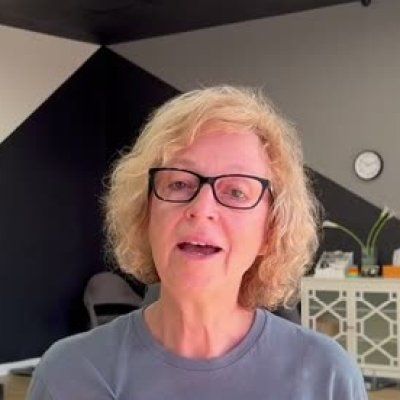
Jane: spine-dominant loss, a 90-minute drive, and a threshold crossed
Osteoporosis back to osteopenia at 18 months; spine +1.8%, hips +5.4% and +8.8%
Jane's variables: a spine diagnosis, a medication conversation with her doctor, and a home 90 minutes away. Her plan had to be worth the drive.
"I drive an hour and a half each way to come here. I just got my DEXA scan results back and I have gone from osteoporosis back to osteopenia."
Verbatim from Jane's on-camera testimonial. Full case study.
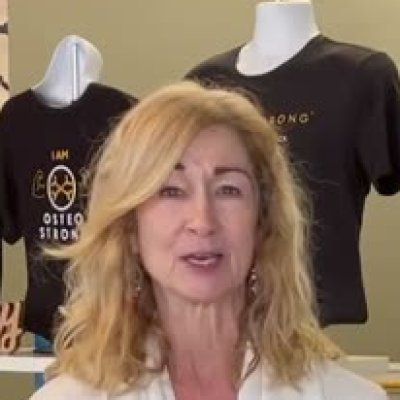
Kathleen: two osteoporotic sites, both now normal
Spine and hip from osteoporosis to normal; femur now osteopenia, no longer osteoporosis
Kathleen's profile, osteoporosis at both spine and hip, is the kind that pushes toward more aggressive pathways. Her follow-up DEXA reclassified both sites.
"In my hip and my spine, I'm completely normal. My femur is osteopenia, no longer osteoporosis. I feel like a new person."
Verbatim from Kathleen's on-camera testimonial. Full case study.
Beverly: a cancer survivor whose plan was built around balance
Strength, balance, and grip up; caught herself in several near-falls
Beverly's variables were different again: cancer treatment in her history, osteopenia, and a fracture risk that lived in her feet as much as her scan. Her plan leaned on balance and grip.
"My strength has increased, balance has increased. I've almost fallen several times and caught myself. My grip has improved too."
Verbatim from Beverly's on-camera testimonial. Full case study.
The Roadmap call is the personalization step
Every member at our Austin and Georgetown centers starts the same way: a free 15-minute phone call, not a machine. You bring your DEXA, your medication list, and your fall and fracture history. We listen first, explain where osteogenic loading fits alongside your physician's plan, answer your questions including cost, and lay out a next step. From there, read how OsteoStrong works, or see every option side by side, including local specialists, on our osteoporosis treatment options in Austin page.
The bottom line
There is no best osteoporosis treatment, only the best plan for a specific skeleton and the person attached to it. Your age, site of loss, FRAX, secondary causes, kidneys, dental and cancer history, falls, and preferences all change the answer, which is why your plan and your friend's can differ. Whatever the prescription side looks like, the loading side should be personalized just as carefully: positioned to your body, progressed against your own numbers, coached every week.
Want a plan built from your variables instead of a chart? Book a free Bone Health Roadmap Call, bring your DEXA, and we will walk through it with you.
Full case studies referenced in this article
- Jane: osteoporosis back to osteopenia at 18 months, driving from Temple
- Kathleen: spine and hip from osteoporosis to normal
- Beverly: cancer survivor with osteopenia, catching herself now
Browse the full case studies hub or read the verification standard behind every story above.
This article is for general education and is not medical advice. Talk to your own doctor before starting, stopping, or changing any medication, supplement, or exercise program, especially if you have a diagnosis of osteopenia or osteoporosis.
Your simple plan from here
- Book your free Bone Health Call. 15 minutes, phone or Zoom, no pressure.
- Come in for a guided first session. A coach walks you through all four devices.
- Track your strength week after week. 15 minutes, once a week. The numbers rise.
Frequently asked questions
What is personalized osteoporosis treatment?
Personalized osteoporosis treatment is a plan built from your specific variables rather than from your T-score alone: age, which skeletal site is losing bone, FRAX fracture probability, any secondary cause driving the loss, kidney function, dental and cancer history, fall history, medication tolerance, and your own preferences. Two women with identical T-scores can reasonably receive different plans. The right one for you comes from a physician who has looked at all of those inputs, not from a chart on the internet.
Why did my doctor recommend a different treatment than my friend with the same T-score?
Because a T-score is one input among many. Your friend may have a lower FRAX, no prior fracture, no parental hip fracture, better kidney function, or a different site of loss. U.S. guidance generally considers treatment at a 10-year major fracture risk of 20% or a hip fracture risk of 3%, and FRAX is driven by more than bone density. Ask your physician which of your variables drove the recommendation; it is a fair question and usually has a clear answer.
Does the site of bone loss change osteoporosis treatment?
Yes. The lowest site usually drives the diagnosis, and the femoral neck feeds the FRAX calculation directly, so hip-dominant loss often carries more weight in a treatment decision than spine-dominant loss at the same T-score. Site also shapes the non-drug plan: osteogenic loading at OsteoStrong positions each device to load the hip and spine at near-maximal force in your strongest range of motion, and members' follow-up DEXAs are read site by site.
Can osteoporosis treatment be personalized without medication?
The non-drug half of the plan is personalized too. Protein and calcium targets depend on your diet and age, vitamin D dosing depends on your blood level, balance work depends on your fall history, and osteogenic loading is individualized by device positioning, joint angle, and week-over-week progression against your own measured force output. Whether medication belongs in your plan is a separate decision that stays with you and your physician.
How does OsteoStrong personalize osteogenic loading?
Every session is coached one-on-one. The coach sets each of the four devices to your body and your strongest range of motion, you produce force against a supported, impact-free position, and the system records the force output. Progression happens in very small joint-angle increments so the stimulus keeps rising as your bone and muscle adapt, which a fixed barbell load cannot do. A member who arrived in a wheelchair and a member who lifts weights get different setups from the first visit.
What happens on a Bone Health Roadmap Call?
It is a free 15-minute phone conversation with a bone health expert. You share your DEXA if you have one, your medications, your fall and fracture history, and what you are trying to accomplish. We listen first, then explain where osteogenic loading fits alongside your physician's plan, answer your questions including cost, and lay out a clear next step. There is no pressure to decide anything on the call. Book a Roadmap Call.