Real osteoporosis treatment success stories share three things: an independent, physician-read DEXA at the start, a consistent weekly plan in between, and a follow-up scan that documents the change. The six members below cover the starting points women ask us about most: osteoporosis back to osteopenia, osteoporosis to normal at two sites, osteopenia to normal after 15 years, a FRAX fracture risk cut by more than half, a T-score of -4 after years in a wheelchair, and a declining spine in Georgetown. Each one added osteogenic loading at OsteoStrong alongside her physician's plan, and each result is verified against our published standard.
What counts as a success story here
Search "osteoporosis treatment success stories" and you get a lot of adjectives and very few scans. So before the stories, here is the standard behind them.
Every DEXA in this article was performed by an independent imaging provider and read by the member's own physician. We do not scan anyone. Every number was either spoken by the member on camera, with a full transcript on our results page, or written and initialed by the member on our results whiteboard. Nothing is rounded up, and nothing is averaged. The full standard is published at how we verify member stories.
One more thing you should know going in: among members who follow the weekly protocol and complete a follow-up DEXA, 8 out of 10 see measurable improvement. The two factors that separate the 8 from the 2 are consistency and starting point. The women below were consistent, and their starting points span the whole range.
We have shorter roundups of three Austin members and three Georgetown members, plus collections of hip stories and spine stories. This article is organized differently: by where each woman started, so you can find the one who started where you are.
Starting point: osteoporosis on the report
The most common question we hear is whether a site that reads osteoporosis can move back across the -2.5 line. Jane's spine did. Kathleen's spine and hip went further, all the way to normal.
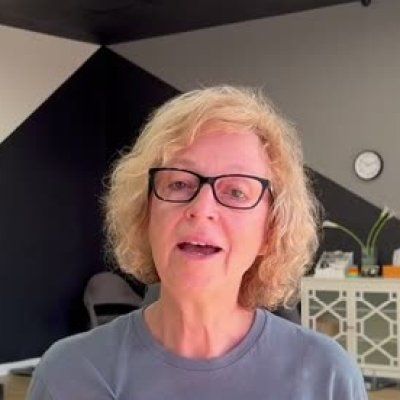
Jane: osteoporosis back to osteopenia at 18 months
Spine reclassified from osteoporosis to osteopenia; spine +1.8%, hips +5.4% and +8.8%
Jane drives an hour and a half each way, every week, because she wanted a non-drug plan she could verify on her next scan. Eighteen months in, the scan crossed the line.
"I drive an hour and a half each way to come here. I just got my DEXA scan results back and I have gone from osteoporosis back to osteopenia."
Verbatim from Jane's on-camera testimonial. Full case study.
Two osteoporotic sites is the profile that pushes physicians toward the most aggressive options, with good reason. Kathleen's follow-up scan put both sites inside the normal range.
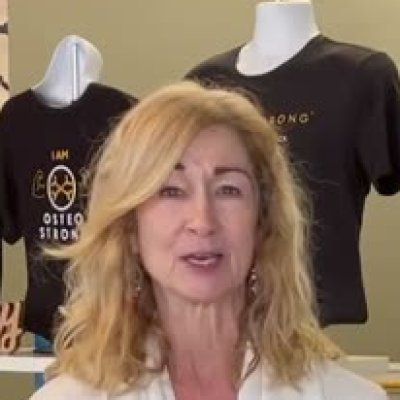
Kathleen: spine and hip from osteoporosis to normal
Spine and hip now normal; femur now osteopenia, no longer osteoporosis
Kathleen, in her 60s, is a multi-year member. Her result is the clearest example we have of category reversal at more than one site on a single report.
"In my hip and my spine, I'm completely normal. My femur is osteopenia, no longer osteoporosis. I feel like a new person."
Verbatim from Kathleen's on-camera testimonial. Full case study.
Starting point: osteopenia, after everything else failed
Marjorie's story is for the woman who has already tried the things she was told to try. She had.
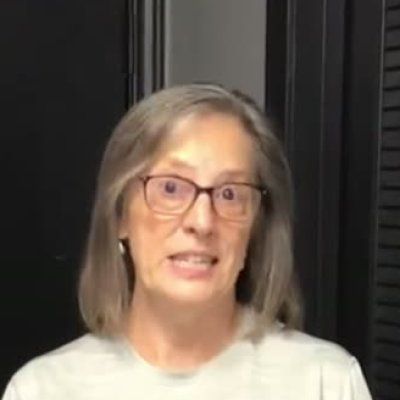
Marjorie: normal after 15 years of osteopenia
DEXA normal at spine and femoral neck after 18 months of weekly sessions
Barbell training, a lot of walking, and hormone therapy had not stopped 15 years of decline. Barbells are capped by the weakest point in your range of motion; osteogenic loading is not, which is the difference her scan finally reflected.
"I was doing barbell weightlifting, walking a lot, doing the things you're supposed to do for bone density. I went on hormone therapy. None of it was making it stop."
"I just had my DEXA and I'm normal. After 15 years of being osteopenic. I didn't think I would ever get to normal. This place works."
Verbatim from Marjorie's on-camera testimonial. Full case study.
Starting point: high fracture risk on paper
FRAX is the 10-year fracture-risk calculator most physicians use to decide whether to prescribe. The U.S. thresholds from the Bone Health & Osteoporosis Foundation are 20% for a major osteoporotic fracture and 3% for hip fracture. Ruth started at 57%. DeeDee, at our Georgetown center, started with a declining spine and a high-fracture-risk reading of her own.
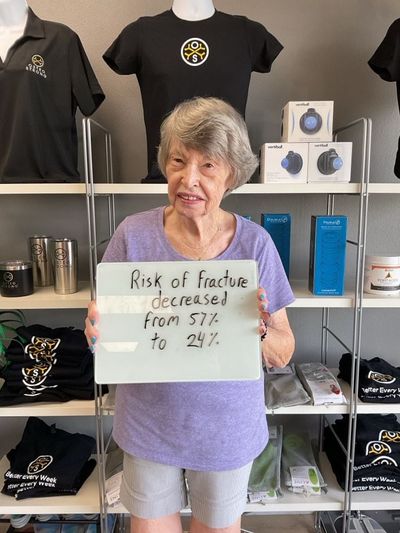
Ruth: FRAX fracture risk from 57% to 24%
10-year fracture risk cut by more than half
Because FRAX is built on the femoral neck T-score, a real gain there pulls the risk number down with it. Ruth's did. How the calculator works is explained in our FRAX article.
"My risk of fracture dropped from 57% to 24%."
Member-initialed DEXA and FRAX summary at OsteoStrong Austin. Full case study.
DeeDee's scan history was headed the wrong way, and she was skeptical. Her follow-up DEXA came back with a spine gain large enough to make her physician re-read the report.
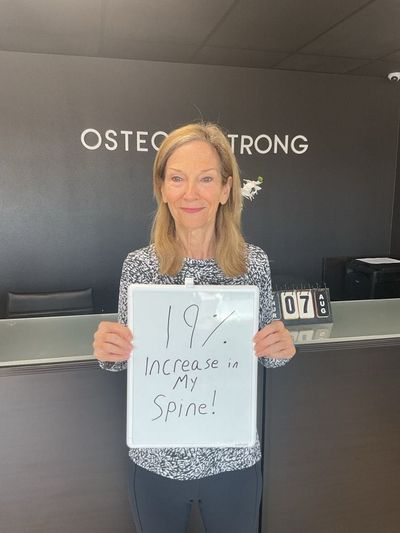
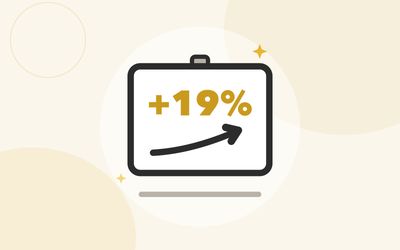
DeeDee: spine +19% in about 18 months
Spine +19% on follow-up DEXA, from a declining baseline and high fracture risk
DeeDee kept her weekly appointment at our Georgetown center for more than 18 months, long enough for the remodeling cycle to show up on a scan.
"I was kind of thinking, oh, that sounds too good to be true. But it wasn't too good to be true. I ended up after a year and a half getting a 19% increase in my spine."
Member-initialed DEXA whiteboard at OsteoStrong Georgetown. Full case study.
Starting point: later in life, with a T-score of -4
If you have been told your situation is about management rather than recovery, read Virginia's story twice.
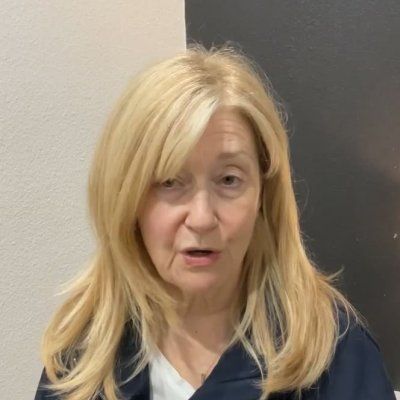
Virginia: from a wheelchair to standing straight
Baseline DEXA T-score of -4; now walking unassisted and standing straight
Virginia is a long-term member and the oldest profile in this article. Her result is the rarest one we publish, and it is real: coach-supported loading, every week, for years.
"Two years ago I had a negative four DEXA. I was in a wheelchair for four years. Today I'm standing up straight."
Verbatim from Virginia's on-camera testimonial. Full case study.
What do these osteoporosis treatment success stories have in common?
Six women, six starting points, one pattern.
- They kept the weekly appointment. One session, about 15 minutes, four devices, a coach beside them, in street clothes. The stimulus has to keep arriving for the remodeling cycle to keep adding bone. What a 15-minute session feels like describes it.
- They loaded above the threshold. Bone adapts to strain above a set point (Wolff's law, refined by Frost's mechanostat), and the osteogenic loading literature cites loads above roughly 4.2 times body weight, after Deere and colleagues. Walking and barbells rarely get there. That is why Marjorie's years of lifting did not move her scan and 18 months of osteogenic loading did. The science of osteogenic loading explains why.
- They gave it a full remodeling interval. Jane, Marjorie, and DeeDee scanned at about 18 months. Kathleen, Ruth, and Virginia over multiple years. Nobody in this article re-scanned at six months and declared victory.
- They re-scanned. We encourage every member to get the follow-up DEXA regardless of how she feels, because the scan is the scoreboard.
- They kept their physician in the loop. OsteoStrong is a non-pharmaceutical option that sits alongside a doctor's plan, and our session protocols are reviewed on an ongoing basis with the physicians who refer to us.
What realistic expectations look like
We publish the standout results because they are what you came here to find. Here is the frame to hold them in.
The first thing that changes is not the scan. Force output on the devices climbs within weeks, and it is measured every session. Balance and grip follow. The DEXA is the last thing to move, because bone remodels in cycles measured in months and a change only counts once it exceeds the scanner's least significant change, typically 3 to 5 percent. For many members the first follow-up scan shows the decline has stopped; the larger gains tend to arrive on the second. How long it takes to improve bone density lays out the full timeline.
Starting point matters too. A site at -2.7 has a shorter trip back across the osteopenia line than a site at -3.5. Both can move. One takes longer.
The bottom line
Osteoporosis treatment success stories are only useful if the numbers are real and the woman in the story started somewhere near where you are. Jane, Kathleen, Marjorie, Ruth, Virginia, and DeeDee cover the starting points we hear about most, and every result above is a physician-read, independently performed DEXA verified against our published standard. What they share is not luck. It is a stimulus strong enough to reach bone, delivered every week, for long enough to show up on a scan.
Want to know what your own next scan could look like? Book a free Bone Health Roadmap Call, bring your DEXA, and we will walk through it with you.
Full case studies referenced in this article
- Jane: spine from osteoporosis back to osteopenia at 18 months
- Kathleen: spine and hip from osteoporosis to normal
- Marjorie: normal bone density after 15 years of osteopenia
- Ruth H.: FRAX 10-year fracture risk from 57% to 24%
- DeeDee: spine +19% in about 18 months
- Virginia: from four years in a wheelchair to walking unassisted
Browse the full case studies hub or read the verification standard behind every number above.
This article is for general education and is not medical advice. Talk to your own doctor before starting, stopping, or changing any medication, supplement, or exercise program, especially if you have a diagnosis of osteopenia or osteoporosis.
Your simple plan from here
- Book your free Bone Health Call. 15 minutes, phone or Zoom, no pressure.
- Come in for a guided first session. A coach walks you through all four devices.
- Track your strength week after week. 15 minutes, once a week. The numbers rise.
Frequently asked questions
Are osteoporosis treatment success stories real?
The ones in this article are. Each member's DEXA was performed by an independent imaging provider and read by her own physician, not by OsteoStrong. Every number is either spoken by the member on camera with a full transcript, or initialed by the member on our results whiteboard. We publish the standard we hold every story to at our verification page, and every member here has a full case study you can read.
Can osteoporosis go back to osteopenia?
Yes. The WHO threshold between the two categories is a T-score of -2.5. When bone mineral density at a site rises enough to cross above that line, the report reclassifies the site as osteopenia. Jane, who drives to our Austin center from Temple, documented exactly that at her spine after 18 months of weekly sessions. It happens when the loading stimulus is strong enough and consistent enough for the remodeling cycle to add bone.
How long did these members take to see results on DEXA?
Bone remodels in cycles measured in months, and follow-up scans are usually spaced 12 to 24 months apart. Jane's, Marjorie's, and DeeDee's results came at about 18 months. Kathleen, Ruth, and Virginia are multi-year members whose results accumulated over more than one scan interval. Strength and balance improve much sooner and are measured every session.
What percentage of OsteoStrong members improve their bone density?
Among members who follow the weekly protocol and complete a follow-up DEXA, 8 out of 10 see measurable improvement. The two factors that matter most are consistency, meaning the weekly session actually happens week after week, and starting point, meaning how far a site had to travel. That is why we encourage every member to re-scan regardless of how she feels.
Did these members stop taking osteoporosis medication?
This article does not report any member's medication decisions, because those belong to each woman and her physician. OsteoStrong is a non-pharmaceutical option that delivers the mechanical loading signal medications do not, and it works alongside any prescription. More than 100 Austin-area physicians refer patients to us while those patients stay on their medication. Anyone on Prolia should never stop it without a physician's exit plan.
Is it too late to improve bone density in your 70s or 80s?
No. Bone remains living tissue for life and adapts to load at any age; what changes is the size of the stimulus required. Virginia came to us after four years in a wheelchair with a DEXA T-score of -4 and now walks in unassisted and stands straight. Read more about starting OsteoStrong at 60, 70, or 80.