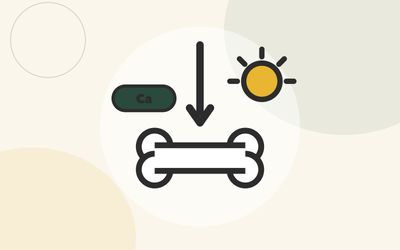
The foods that help build bone density naturally are the ones that supply bone's raw materials. Dairy, canned fish with bones, calcium-set tofu, fortified plant milks, and leafy greens supply calcium. Eggs, fish, poultry, yogurt, and legumes supply the protein that forms bone's collagen scaffold. Fatty fish and fortified milk supply vitamin D, greens supply vitamin K, and nuts, seeds, beans, and potatoes supply magnesium and potassium. What to limit: heavy alcohol, very high sodium, and daily cola. Food delivers the materials; osteogenic loading at OsteoStrong delivers the signal that tells your skeleton to use them.
The DEXA came back, the word osteopenia or osteoporosis was in the report, and your first instinct was to fix it in the kitchen. That is a good instinct. Nutrition is one of the few bone levers you control three times a day, and a lot of women over 50 are quietly short on the nutrients bone is made of.
This post is the grocery list. We already covered the protein side in depth in how much protein you actually need to build bone, so here we widen the lens to every bone nutrient, food by food, then put it together into a sample day. And we will be straight about the limit: food supplies the materials to build bone density naturally, but it does not supply the instruction to build. That comes from load.
How foods build bone density naturally: materials, not the signal
Bone is a protein scaffold (mostly collagen) hardened with mineral (mostly calcium and phosphate). To build it, your body needs both the scaffold materials and the minerals, plus vitamin D to absorb the calcium and a supporting cast of nutrients that help it get where it is going.
But your skeleton does not add bone just because the materials arrived. Bone adapts to strain. Wolff's law and Frost's mechanostat describe the rule: when bone is loaded above a threshold, it builds; when it is not, it does not, however well fed. Deere and colleagues put that threshold at roughly 4.2 times body weight for hip bone, a level everyday activity does not reach. This is why a great diet and a declining DEXA can coexist for years.
So read every food below as necessary, not sufficient. Keep the plate full and add the signal.
What foods are highest in calcium?
The NIH Office of Dietary Supplements sets the target for women 51 and older at 1,200 mg of calcium a day, food first. These get you there:
- Milk, yogurt, kefir, and hard cheese. The most concentrated everyday sources, and yogurt brings protein with it.
- Canned sardines and canned salmon, bones included. The soft bones are the calcium; do not pick them out.
- Calcium-set tofu. Look for calcium sulfate on the label. Edamame and tempeh add smaller amounts.
- Fortified plant milks, orange juice, and cereals. Often fortified to dairy-like levels; shake the carton, since the calcium settles.
- Kale, bok choy, collard greens, turnip greens, and broccoli. Well-absorbed plant calcium.
- Almonds, white beans, chickpeas, and figs. Steady contributors rather than stars.
One caution: spinach and Swiss chard look calcium-rich on paper but bind most of it with oxalate, so your body keeps very little. Eat them for other reasons, not for calcium.
If your usual day comes up short, that gap is the size of supplement you need, not the whole 1,200. We explain why calcium pills are not a substitute for the rest of the plan in is calcium supplementation alone enough for osteoporosis?
Protein: the scaffold half of bone
Roughly half of bone's volume is protein. Skimp on it and there is nothing for the minerals to harden onto, and muscle, which protects bone from falls, thins along with it. Older adults also process protein less efficiently than younger ones, which is why many bone-health researchers suggest more than the bare minimum after 50.
Bone-friendly protein sources:
- Eggs, whole, for complete protein plus a little vitamin D in the yolk.
- Fish and shellfish, especially salmon, sardines, and trout, which double as vitamin D sources.
- Poultry and lean beef.
- Greek yogurt and cottage cheese, which bring calcium along.
- Lentils, beans, tofu, and tempeh for plant-based eaters.
Spread protein across the day rather than loading it all at dinner; your body builds better with a steady supply. For grams-per-day guidance and why complete amino-acid profiles matter, our protein post covers it.
Vitamin D, vitamin K, magnesium, and potassium: the supporting cast
Vitamin D controls how much calcium you absorb from everything above. Food sources are limited: fatty fish (salmon, sardines, mackerel), egg yolks, fortified milk and plant milks, and mushrooms exposed to UV light. The NIH RDA is 600 IU to age 70 and 800 IU after, and many physicians target a 25-hydroxyvitamin D blood level of at least 30 ng/mL. Most women cannot get there on food alone, which is why D is the one supplement almost every physician endorses. Details in how much vitamin D you need for bone health.
Vitamin K helps activate osteocalcin, a protein that binds calcium into bone. K1 is in leafy greens (kale, spinach, broccoli, Brussels sprouts). K2 is in natto, hard and aged cheeses, egg yolks, and some fermented foods. If you take warfarin, do not change your vitamin K intake without your physician, because it affects the drug's dosing. Our vitamin K2 post sorts out the evidence.
Magnesium is part of bone's mineral structure and is needed to activate vitamin D. The NIH RDA for women 31 and older is 320 mg a day. Pumpkin seeds, almonds, cashews, black beans, edamame, whole grains, and dark chocolate are the best food sources. More in can magnesium help your osteoporosis treatment?
Potassium helps buffer acid load so your body does not pull calcium from bone to do it. Potatoes, sweet potatoes, bananas, oranges, tomatoes, beans, and leafy greens are all rich in it, and they are also the foods most people already need more of.
What does a bone-building day of eating look like?
Here is a sample day that covers every nutrient above without a spreadsheet:
Breakfast. Plain Greek yogurt with sliced almonds, a handful of berries, and a drizzle of honey. Coffee is fine. (Calcium, protein, magnesium.)
Lunch. A big salad built on kale or romaine, topped with canned salmon or sardines, chickpeas, cherry tomatoes, and olive oil. A slice of whole-grain bread. (Calcium, protein, vitamin D, vitamin K, potassium.)
Afternoon snack. An orange and a small piece of hard cheese, or edamame if you are avoiding dairy. (Calcium, potassium.)
Dinner. Baked salmon or roasted chicken thighs, a baked sweet potato, and sautéed bok choy or broccoli with garlic. (Protein, vitamin D, potassium, vitamin K, calcium.)
Evening. A glass of milk or fortified plant milk, and a square of dark chocolate if you want it. (Calcium, magnesium.)
Swap freely: tofu for the salmon, lentil soup for the chicken, fortified oat milk for the dairy. The pattern that matters is a calcium source, a protein source, and a vegetable at most meals.
What to limit: alcohol, sodium, and cola
Very little needs to be banned. Three things deserve moderation:
- Heavy alcohol. Regular heavy drinking suppresses bone-building cells, interferes with vitamin D and calcium handling, and raises fall risk. Heavy use is one of the inputs in the FRAX fracture calculator for a reason. An occasional glass of wine is not the problem; a daily habit of several drinks is.
- Very high sodium. The more sodium you excrete, the more calcium goes out with it. Most excess sodium comes from processed and restaurant food rather than the salt shaker, so cooking more meals at home does most of the work.
- Daily cola. Observational research, including the Framingham Osteoporosis Study, linked regular cola intake with lower hip density in women. The mechanism is debated; the practical read is that cola tends to replace milk and adds nothing bone can use.
Coffee and tea are fine in normal amounts, especially when you are meeting your calcium target. Prunes are worth adding: small trials have found them helpful for bone in postmenopausal women, and they are an easy snack.
Do you still need supplements if you eat well?
Usually one, sometimes two. Vitamin D is hard to get from food in the amounts most physicians want, so a D3 supplement is common even for careful eaters. Calcium is only needed if your food tally falls short of 1,200 mg. Magnesium and vitamin K2 are worth discussing if your diet is low in the foods above. Everything else is optional at best. Our hub on the best vitamins and supplements for osteoporosis ranks them by evidence, and your physician can check your vitamin D level with a simple blood test.
What this looks like at OsteoStrong
At our Austin and Georgetown centers, we treat food as the fuel and our sessions as the work order. You keep eating the way this post describes. Once a week, for about 15 minutes, a coach positions you on four devices that let you produce force at multiples of your body weight in your strongest range of motion, with no impact and nothing to drop. That load is what tells bone to take the calcium and protein you ate and build with it.
Because the progression happens in very small joint-angle increments, the stimulus keeps rising as you get stronger instead of plateauing. Your force output is measured every session, so you see progress long before your next DEXA. Among members who follow the weekly protocol and complete a follow-up scan, 8 out of 10 see measurable improvement; consistency and starting point make the biggest difference. Scans are performed by independent imaging providers, not by us. See how the program works and where it fits in a complete non-drug osteoporosis plan.
The bottom line
The foods that help build bone density naturally are not exotic: dairy or fortified alternatives, fish with bones, eggs, legumes, leafy greens, nuts, seeds, and potatoes. Hit 1,200 mg of calcium from food first, eat protein at every meal, keep vitamin D in range, and go easy on alcohol, sodium, and cola. Then give your skeleton a reason to use all of it.
Want to know where osteogenic loading fits in your plan? Book a free Bone Health Roadmap Call, bring your DEXA, and we will walk through it with you.
This article is for general education and is not medical advice. Talk to your own doctor before starting, stopping, or changing any medication, supplement, or exercise program, especially if you have a diagnosis of osteopenia or osteoporosis.
Your simple plan from here
- Book your free Bone Health Call. 15 minutes, phone or Zoom, no pressure.
- Come in for a guided first session. A coach walks you through all four devices.
- Track your strength week after week. 15 minutes, once a week. The numbers rise.
Frequently asked questions
What foods help build bone density naturally?
The foods that help build bone density naturally are the ones that supply bone's raw materials: dairy, canned sardines and salmon with bones, calcium-set tofu, and leafy greens for calcium; eggs, fish, poultry, Greek yogurt, and legumes for protein; fatty fish and fortified milk for vitamin D; greens and natto for vitamin K; and nuts, seeds, beans, and whole grains for magnesium and potassium. Food supplies the material. Mechanical load supplies the signal to use it.
What is the single best food for bone density?
There is no single best food, because bone needs several nutrients at once. If you had to pick one, plain Greek yogurt covers calcium and protein in one serving, and canned sardines with bones add calcium, protein, and vitamin D together. A varied plate beats any superfood. Aim for a calcium source, a protein source, and a vegetable at most meals.
Can you rebuild bone density with diet alone?
No. Diet supplies the calcium and protein bone is built from, and vitamin D controls how much calcium you absorb, but none of that tells your skeleton to add bone. That instruction comes from mechanical load above roughly 4.2 times body weight, a threshold everyday activity does not reach. Eat well and add a loading stimulus; the two together are what move a DEXA.
What foods should you avoid with osteoporosis?
Very few foods need to be avoided outright. The three to limit are heavy alcohol, which suppresses bone-building cells and raises fall risk; very high sodium, which increases the calcium you lose in urine; and daily cola, which observational studies have linked with lower hip density in women. Moderate coffee and tea are fine, especially if you are meeting your calcium target.
How much calcium should I get from food each day?
The NIH Office of Dietary Supplements sets the target for women 51 and older at 1,200 mg of calcium per day, and recommends food as the first source. Three servings of dairy or fortified alternatives plus a serving of greens or fish with bones will get most women close. Use a supplement only for whatever gap is left. We cover the details in our calcium post.
Is a plant-based diet bad for bone density?
Not if it is planned. Calcium-set tofu, fortified plant milks, edamame, white beans, almonds, kale, and bok choy supply calcium, and lentils, beans, tofu, and tempeh supply protein. The two nutrients plant-based eaters most often fall short on are vitamin D and vitamin B12, so check both with your physician. Spinach is high in calcium on paper but most of it is bound by oxalate and poorly absorbed.