How much vitamin D you need for bone health depends on your age and your blood level. The NIH Office of Dietary Supplements sets the RDA at 600 IU a day through age 70 and 800 IU after 70, with a tolerable upper limit of 4,000 IU a day. Many physicians who treat osteoporosis target a 25-hydroxyvitamin D blood level of at least 30 ng/mL and use a blood test, not a guess, to set your dose. Vitamin D lets your gut absorb calcium; it does not tell bone to build. That signal comes from mechanical load, which is where osteogenic loading at OsteoStrong fits alongside your physician's plan.
Why vitamin D is the first thing your doctor checks
If your DEXA came back with osteopenia or osteoporosis, there is a good chance the next thing your physician ordered was a blood test for vitamin D. That is not a stall. It is the first question in any bone plan, because a low vitamin D level quietly undoes everything else you do: the calcium you eat, the medication you take, the loading you add.
This post is the vitamin D spoke of our ranked guide to the best vitamins and supplements for osteoporosis. It covers how much vitamin D you need for bone health, what the blood number means, which form to take, whether living in Austin or Georgetown gets you off the hook (it does not), and why vitamin D on its own has never built anyone's bone.
What vitamin D actually does for your bones
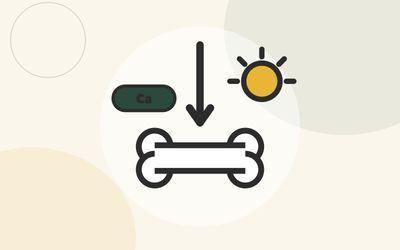
Vitamin D's main job is to let the small intestine absorb calcium. When your level is adequate, a meaningful share of the calcium you eat gets into the blood. When it is low, most of that calcium passes through unused.
The body does not tolerate low blood calcium, because the heart and nerves need it. So when absorption drops, the parathyroid glands release a hormone that pulls calcium out of the skeleton to keep the blood steady. Low vitamin D therefore does not just fail to help bone. It actively withdraws from the account.
Two more things worth knowing. Converting vitamin D into its active form needs magnesium, which is why magnesium and vitamin D travel together in a good plan. And vitamin D supports the muscles that hold you up and catch you when you trip. Severe deficiency shows up as muscle weakness and, in adults, a softening of bone called osteomalacia. Both raise fall risk, and about 1 in 3 adults over 65 falls each year according to the CDC. A bone plan that ignores vitamin D leaves the door open in two places at once.
How much vitamin D do you need for bone health?
The numbers from the NIH Office of Dietary Supplements:
- RDA, women up to age 70: 600 IU a day
- RDA, women over 70: 800 IU a day
- Tolerable upper limit: 4,000 IU a day for adults
Those RDAs are set for the general population, and they assume you start with a normal level. Many physicians who treat osteoporosis take a different approach. They measure your 25-hydroxyvitamin D level and dose to a target, commonly at least 30 ng/mL. A woman who starts well below that may be given a higher dose for a period of weeks or months to bring the level up, then a lower maintenance dose. That is a prescribing decision, and it belongs to you and your physician.
Two guardrails. First, the upper limit exists because vitamin D is stored in fat and can build up; very high intake over time can push blood calcium too high. Second, more is not better once you are in range. The goal is a level that lets calcium do its job, not the highest number on the lab sheet.
D3 vs D2
Vitamin D3 (cholecalciferol) is the form your skin makes in sunlight and the form in most over-the-counter supplements. Vitamin D2 (ergocalciferol) comes from plant and fungal sources and is the form in some high-dose prescriptions. Both raise your blood level. Many physicians prefer D3 for day-to-day supplementation because it tends to raise and hold the 25-hydroxyvitamin D level more reliably, but if your doctor has you on prescription D2, that is a reasonable choice and not something to switch on your own. Vitamin D is fat-soluble, so taking it with a meal that contains some fat helps absorption.
Should you get your vitamin D level tested?
If you have osteopenia or osteoporosis, yes, and most physicians will order it without being asked. The test is called 25-hydroxyvitamin D (sometimes written 25(OH)D), it is a routine blood draw, and it is the only way to know where you actually stand. Symptoms are unreliable, and so is guessing from how much time you spend outside.
Timing matters a little. Levels tend to be lowest at the end of winter and highest at the end of summer, so a test in March and a test in September can tell different stories. Once you are on a stable dose, a recheck a few months later confirms the dose is working. After that, your physician sets the interval, often alongside your follow-up DEXA schedule.
Bring the result to your free Bone Health Roadmap Call along with your DEXA. We do not read labs for you, but we do want to know the pantry is stocked before you start loading.
Who needs more vitamin D
Some women can meet the RDA and still run low. You are more likely to need a higher dose, and more likely to need testing, if any of these apply:
- You are over 70. Skin makes less vitamin D with age, and the RDA rises for a reason.
- You spend most of your time indoors or cover up outside, which describes most of a Central Texas summer.
- You have darker skin, which makes vitamin D more slowly in the same amount of sun.
- You carry more body weight, because vitamin D is stored in fat and less of it circulates.
- You have a condition that limits absorption: celiac disease, Crohn's disease, or prior bariatric surgery.
- You take medications that affect vitamin D, including long-term steroids and some anticonvulsants.
- Your kidneys or liver are not working well, since both are needed to convert vitamin D to its active form.
Can Texas sun cover it?
Austin sits far enough south that the sun can make vitamin D most of the year, which is exactly why so many people here assume they are fine. In practice, many are not. Sunscreen and clothing block the wavelengths that make vitamin D. Summer heat pushes people indoors during the hours that matter. And skin produces less with every decade after 50. Enjoy the sun for every other reason, but do not let it stand in for a blood test.
Signs of deficiency
Most women with a low level feel nothing, which is the problem. When symptoms do show up, they are vague: fatigue, low mood, aching bones, muscle weakness, cramps, and more trips and stumbles than usual. Severe, long-standing deficiency can cause osteomalacia, where bone softens and hurts. If any of that sounds familiar, a blood test is a cheap way to rule it in or out.
Why vitamin D without load does not build bone
Here is the part the supplement aisle leaves out. Vitamin D gets calcium into the blood. It does not tell the skeleton to use it.
Bone adds density in response to mechanical strain above a threshold, a principle described by Wolff's law and Frost's mechanostat. Research on hip bone associates meaningful adaptation with loads of roughly 4.2 times body weight (Deere et al., 2012). Below that, the body sees no reason to lay down new bone, and the calcium you absorbed goes to maintenance, or nowhere. Correcting a deficiency stops the withdrawals. It does not, by itself, start the deposits.
That is why density gains from nutrition alone are so hard to find in the research, and why the four-pillar plan without medication pairs raw materials with a loading signal rather than leaning on either one. The same logic applies to calcium, which we cover in is calcium supplementation alone enough for osteoporosis?
What this looks like at OsteoStrong
We ask every new member the vitamin D question early, and we send them back to their physician for the answer. Then we supply the piece the blood test cannot: the signal.
Osteogenic loading uses four devices that let you push, pull, and press in your strongest range of motion, where your skeleton can safely produce force well above what a barbell allows. There is no impact and no weight to balance. A coach stands beside you for the whole session, which takes about 15 minutes once a week in street clothes. Your force output is measured every session, so you can watch the number climb between DEXAs. What a 15-minute session actually feels like walks through it, and if you are worried about steadiness on your feet, our fall prevention and balance training page covers the balance side of the same weekly visit.
The combination is the point. Vitamin D and calcium keep the account funded; loading tells the body where to build. Among members who follow the weekly protocol and complete a follow-up DEXA with an independent imaging provider, 8 out of 10 see measurable improvement, with consistency and starting point as the biggest factors. Austin member Nicole, whose spine is no longer osteoporotic after 15 months, is one of them; her full case study shows what that looks like on a report. More than 100 Austin-area physicians refer patients to us, and our session protocols are reviewed on an ongoing basis with the physicians who refer to us.
The bottom line
How much vitamin D you need for bone health starts with the RDA (600 IU a day to age 70, 800 IU after) and ends with a blood test: many physicians dose to a 25-hydroxyvitamin D level of at least 30 ng/mL and stay under the 4,000 IU upper limit. Take D3 with a meal unless your doctor has prescribed otherwise, get retested after a dose change, and do not let the Texas sun talk you out of the lab. Then give the calcium you are now absorbing a reason to become bone.
Want to know where osteogenic loading fits in your plan? Book a free Bone Health Roadmap Call, bring your DEXA and your vitamin D result, and we will walk through it with you.
This article is for general education and is not medical advice. Talk to your own doctor before starting, stopping, or changing any medication, supplement, or exercise program, especially if you have a diagnosis of osteopenia or osteoporosis.
Your simple plan from here
- Book your free Bone Health Call. 15 minutes, phone or Zoom, no pressure.
- Come in for a guided first session. A coach walks you through all four devices.
- Track your strength week after week. 15 minutes, once a week. The numbers rise.
Frequently asked questions
How much vitamin D should a woman over 50 take for bone health?
The NIH Office of Dietary Supplements sets the RDA at 600 IU a day through age 70 and 800 IU a day after 70, with a tolerable upper limit of 4,000 IU a day. Those figures assume a normal starting level. Many physicians who treat osteoporosis instead measure your 25-hydroxyvitamin D and dose to a target, commonly at least 30 ng/mL, with a higher dose for a period of weeks or months if you start low. The exact dose belongs to you and your physician.
What vitamin D blood level is best for bone density?
The test is called 25-hydroxyvitamin D. Many physicians who treat osteoporosis target a level of at least 30 ng/mL, because below that the gut absorbs less calcium and the parathyroid glands pull calcium out of bone to keep the blood steady. Higher is not better once you are in range; the goal is a level that lets calcium do its job, not the biggest number on the lab sheet.
Is vitamin D3 better than D2 for bones?
Vitamin D3 (cholecalciferol) is the form your skin makes in sunlight and the form in most over-the-counter supplements. D2 (ergocalciferol) comes from plant and fungal sources and is used in some high-dose prescriptions. Both raise your blood level. Many physicians prefer D3 for daily use because it tends to raise and hold the level more reliably, but if your doctor prescribed D2, that is a reasonable choice and not something to switch on your own.
Can you get enough vitamin D from the sun in Texas?
Usually not, even in Austin and Georgetown. Sunscreen and clothing block the wavelengths that make vitamin D, summer heat keeps people indoors during the hours that matter, and skin produces less vitamin D with every decade after 50. Plenty of Central Texans test low. Enjoy the sun for every other reason, but let a blood test, not the weather, decide whether you need a supplement.
What are the signs of vitamin D deficiency?
Most women with a low level feel nothing, which is why testing matters. When symptoms appear they are vague: fatigue, low mood, aching bones, muscle weakness, cramps, and more stumbles than usual. Long-standing severe deficiency can cause osteomalacia, a softening of bone that hurts. If you have osteopenia or osteoporosis, ask for the 25-hydroxyvitamin D test rather than waiting for symptoms.
Does vitamin D increase bone density on its own?
No. Vitamin D lets your gut absorb calcium and stops the body from withdrawing calcium from your skeleton, which is essential. But bone adds density only in response to mechanical strain above a threshold, and vitamin D carries no such signal. Correcting a deficiency stops the losses; it does not start the gains. Pairing adequate vitamin D with osteogenic loading gives the calcium you absorb a reason to become bone. See the full supplement ranking.