Physical therapy for osteoporosis helps, and for some situations it is the right first call: recovering from a fracture, correcting a rounded posture, learning to hinge and lift without loading the spine, easing back pain, and training balance to prevent falls. What physical therapy is not built to do is raise bone density by much, because the loads used in therapeutic exercise sit well below the threshold bone needs to adapt (roughly 4.2 times body weight). The strongest plans use PT for movement quality and fall prevention, your physician for the medical decisions, and osteogenic loading at OsteoStrong for the density signal.
Your doctor said the word osteoporosis, and somewhere in the same conversation the words "physical therapy" came up. Maybe you had a fracture. Maybe your posture has started to round. Maybe you just asked "what should I do?" and PT was the answer.
Now you want to know what you are signing up for: will physical therapy for osteoporosis actually change your bones, or teach you how to bend correctly? The honest answer is that it does one of those very well and the other only a little. Here is how to get the most from PT, and what to pair it with.
What does physical therapy for osteoporosis actually do?
A physical therapist who treats osteoporosis is a movement specialist. Their job is to make your body safer to live in. A typical program includes:
- Posture and spinal alignment. Strengthening the back extensor muscles that hold you upright, and teaching you to stand and sit without the forward curve (kyphosis) that loads the front of the vertebrae.
- The hip hinge. How to bend from the hips with a neutral spine to pick up a laundry basket, a grandchild, or a bag of mulch, instead of rounding the back under load.
- Safe movement patterns. Getting in and out of bed, cars, and chairs; reaching overhead; carrying groceries. The everyday moves that quietly stress a fragile spine.
- Balance and gait training. Single-leg stance, tandem walking, reaction drills, and step training that reduce the chance of the fall that causes most fractures.
- Strength for the legs and hips. Body-weight, band, and light-weight work so the muscles around your hips and spine can absorb a stumble.
- Pain management. Especially after a vertebral compression fracture, where movement often feels unsafe even when it is not.
Every item on that list is valuable. Most of them are things a loading program does not teach, and a good PT teaches them in a few visits.
When PT is the right first call
There are situations where physical therapy should come before anything else:
- After a fracture. Hip, wrist, or vertebral. Post-fracture rehab is PT's home turf, and getting you walking, confident, and off the pain cycle is where it shines.
- A rounded upper back or recent height loss. Extensor strengthening and postural training are the direct answer, and they pair well with the approach in our post on reversing height loss after 50.
- Fear of movement. Many women stop moving after a diagnosis because they do not know what is safe. A PT can show you, hands on, which moves are fine and how to modify the rest.
- A recent fall or near-fall. Gait and balance assessment, plus a targeted program, before the next one.
- Ongoing back pain. So that the pain gets addressed as a movement problem and not just a prescription problem.
If any of those is you, ask your physician for a referral to a therapist with osteoporosis experience. Spine-safe modifications matter, and not every clinic practices them by default. For the general movement rules, our guide to safe exercises for osteoporosis lines up with what a good PT will teach.
Can physical therapy increase bone density?
Here is where expectations need adjusting, and it is not a criticism of the profession. It is a matter of physics.
Bone adapts to strain. Wolff's law and Frost's mechanostat describe the rule: load bone above a threshold and it builds; load it below and it holds or slowly loses. Deere and colleagues put that threshold at roughly 4.2 times body weight for hip bone. Walking produces a little more than one times body weight. Resistance bands, light dumbbells, and body-weight squats are safe and useful, and they sit far below the line.
Therapeutic exercise stays below that line on purpose. The goals of PT are movement quality, muscle strength, balance, and pain reduction, and it would be reckless to load a woman with a compression fracture near her maximum on her third visit. Physical therapists are also working inside a defined course: a set number of weeks, a home program, and discharge when the functional goals are met. Bone remodeling is measured in months, and DEXA changes only count when they exceed the scanner's least significant change (typically around 3 to 5 percent), so density is not what a short PT course is designed to move.
What PT does build is the strength, posture, and balance that protect the bone you have. That protection is real. It is just not the same job as adding density.
Does insurance cover physical therapy for osteoporosis?
Generally yes, when it is medically necessary. Medicare Part B typically covers outpatient physical therapy that is ordered or supported by a physician's plan of care, with the usual deductible and coinsurance. Most commercial plans cover PT with a copay per visit and sometimes a cap on visits per year. Coverage is almost always tied to a specific goal, such as fracture recovery, pain, or documented fall risk, and ends when the goal is met or progress plateaus.
Practical tips: ask your physician for a referral that states the diagnosis and goal, confirm your plan's visit limit and copay before the first appointment, and ask the therapist for a written home program so the work continues after discharge. Cost for the loading side of a plan is a separate conversation, and we cover it on the free Roadmap call.
How PT and osteogenic loading complement each other
Think of it as two specialists working on the same skeleton:
| Job | Physical therapy | Osteogenic loading |
|---|---|---|
| Teach spine-safe movement | Yes, hands on | Not the focus |
| Post-fracture recovery | Central | After clearance |
| Posture and extensor strength | Yes | Supports it |
| Balance and reaction time | Yes | Yes, weekly |
| Load above the bone-building threshold | No, by design | Yes, every session |
| Duration | Weeks to months | Ongoing, weekly |
The order often looks like this. PT first if you have a fracture, pain, or a movement problem, so you learn how to hinge, brace, and balance. Loading alongside or right after, once your physician clears you, so bone gets the signal PT was never meant to send. The hip hinge your therapist taught you is exactly the position our coaches use to help you load the hip and spine safely. The two reinforce each other.
Your physician stays the hub. Medication, if prescribed, works on bone chemistry. PT works on movement. Loading works on the mechanical signal. None of them replaces the others, and the decision about any medication belongs to you and your physician. If you want the whole landscape of options in one place, including local specialist types, read our guide to osteoporosis treatment options in Austin.
What trained reflexes look like in real life
Balance training, whether in a PT clinic or on our vibration plate, pays off in a single moment you never schedule.
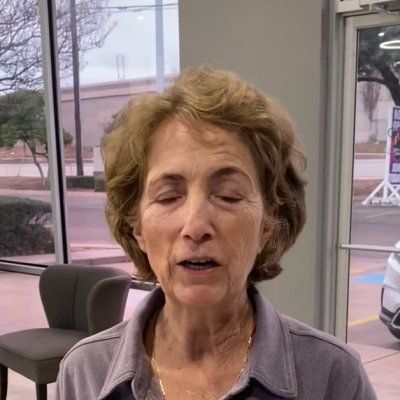
Claudia: the fall that did not happen
Caught herself when her foot caught on the stairs
Claudia is in her 70s. The reaction that stopped her fall was not luck; it was a reflex that months of weekly balance work had rebuilt, the same category of gain a good PT balance program is after.
"I slipped on the stairs and I caught myself. Before OsteoStrong, that would have been a fall."
Verbatim from Claudia's on-camera testimonial. Full case study.
That is the outcome both approaches are chasing. PT gets you there through supervised drills over a course of visits; we keep it going, week after week, for years. More on the balance side in our fall prevention and balance training page.
What this looks like at OsteoStrong
At our Austin and Georgetown centers, a session is about 15 minutes once a week, in street clothes, with a coach beside you the whole time. Four devices let you generate force at multiples of your body weight in your strongest range of motion, with no impact, nothing to lift overhead, and nothing to drop. The load rises in very small joint-angle increments as you get stronger, so the stimulus stays above the threshold instead of plateauing. Your force output is measured every session, and the balance work happens every week too.
Among members who follow the weekly protocol and complete a follow-up DEXA, 8 out of 10 see measurable improvement; consistency and starting point are the biggest factors. Scans are performed by independent imaging providers, not by us, and we encourage every member to re-scan regardless of how they feel. Our session protocols are reviewed on an ongoing basis with the physicians who refer to us, and more than 100 Austin-area physicians do. If you are in PT now, tell your therapist you are considering osteogenic loading; the conversation is usually a short one. See how it works.
The bottom line
Physical therapy for osteoporosis helps, and for fracture recovery, posture, safe movement, and balance it is often the right place to start. Its loads are kept low on purpose, so it is not the tool that raises bone density. Use PT to learn how to move, your physician for the medical plan, and a loading program to give bone the signal it is waiting for. Done together, they cover every job.
Want to know where osteogenic loading fits alongside your PT plan? Book a free Bone Health Roadmap Call, bring your DEXA and your therapist's home program, and we will walk through it with you.
Full case studies referenced in this article
Browse the full case studies hub or read the verification standard behind every member story we publish.
This article is for general education and is not medical advice. Talk to your own doctor before starting, stopping, or changing any medication, supplement, or exercise program, especially if you have a diagnosis of osteopenia or osteoporosis.
Your simple plan from here
- Book your free Bone Health Call. 15 minutes, phone or Zoom, no pressure.
- Come in for a guided first session. A coach walks you through all four devices.
- Track your strength week after week. 15 minutes, once a week. The numbers rise.
Frequently asked questions
Does physical therapy help osteoporosis?
Yes, for the things physical therapy is designed to do: teaching a safe hip hinge, correcting posture, improving balance and gait, easing pain, and rebuilding function after a fracture. A physical therapist who treats osteoporosis can lower your fall risk and make everyday movement safer. What PT does not usually do is deliver the level of mechanical load bone needs to add density, so it works best paired with a loading program and your physician's plan.
Can physical therapy increase bone density?
Rarely by a meaningful amount on its own. Bone adds density when loaded above roughly 4.2 times body weight (Deere et al.), and therapeutic exercise with bands, light weights, and body weight stays well below that on purpose, because the goal is safe movement, not maximal force. PT builds the muscle, balance, and posture that protect bone. Osteogenic loading supplies the density signal. They complement each other.
Does insurance cover physical therapy for osteoporosis?
Usually, when it is medically necessary and ordered or supported by a physician's plan of care. Medicare Part B generally covers outpatient physical therapy under those conditions, and most commercial plans cover it with a copay and sometimes a visit limit. Coverage is typically tied to a specific goal such as post-fracture recovery, pain, or fall risk, and ends when that goal is met. Confirm your plan's rules before your first visit.
What does a physical therapist do for osteoporosis?
A PT evaluates your posture, strength, balance, gait, and movement habits, then builds a program around what needs work: spine-safe lifting and bending, back extensor strengthening, hip and leg strength, balance drills, and pain management. After a vertebral or hip fracture, PT is central to getting you walking and confident again. Ask for a therapist with experience in osteoporosis, since spine-safe modifications matter.
Should I do physical therapy or OsteoStrong?
If your physician has ordered PT, do it. It teaches movement patterns and rebuilds function in ways nothing else does, especially after a fracture. OsteoStrong addresses a different job: one 15-minute weekly session that loads bone above the density-building threshold safely, with a coach beside you. Many Austin and Georgetown members do both, and more than 100 Austin-area physicians refer patients to OsteoStrong alongside PT and medication.
How long does physical therapy for osteoporosis last?
Most courses run several weeks to a few months, typically one to three visits a week, and end with a home program once you have met your goals. That time limit is built into how PT is prescribed and covered. Bone remodels over months and years, which is why a longer-term loading plan is worth putting in place while PT is still teaching you how to move safely.