You're at your doctor's office, and she says one of two words: osteopenia or osteoporosis. They sound nearly identical, and honestly, most of us walked out of the appointment not entirely sure which one we have - or what the difference actually means for our lives.
Let's clear this up.
The one-sentence difference
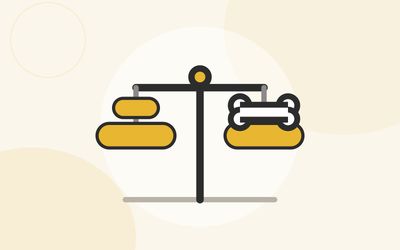
Osteopenia means your bones have started to thin, but you still have plenty of bone. Osteoporosis means your bones have thinned enough to be at meaningful risk of breaking.
Both are on the same spectrum. Osteopenia is earlier on the spectrum. Osteoporosis is further along.
What the numbers say
Remember your T-score from your DEXA scan?
- T-score above -1.0: Normal
- T-score between -1.0 and -2.5: Osteopenia
- T-score below -2.5: Osteoporosis
- T-score below -2.5 with a fracture history: Severe osteoporosis
Osteopenia is a range. Osteoporosis is a threshold. That matters, because if you're diagnosed with osteopenia at -1.2 versus -2.4, you're in dramatically different places - even though the diagnosis word is the same.
Ask your doctor for the exact number. Don't just accept the label.
Why osteopenia often gets dismissed
Many doctors won't treat osteopenia with medication, and there's sensible reasoning behind that: the common osteoporosis drugs (bisphosphonates, for example) have real side effects, and the risk-reward math at a T-score of -1.2 isn't great.
But "don't treat" is not the same as "do nothing." The default advice women often receive - "take calcium, take vitamin D, walk more, and we'll rescan in two years" - is a formula for slowly progressing from osteopenia into osteoporosis while you wait.
Walking is wonderful for many things, but it doesn't generate the ~4.2x-body-weight force your bones need to actively rebuild. Calcium and vitamin D are raw materials; your bones need a reason to use them.
Why osteoporosis isn't the end of the line either
If your T-score came back below -2.5, the first thing to know is this: osteoporosis is not permanent.
Bones are living tissue. They're constantly being broken down (by cells called osteoclasts) and rebuilt (by osteoblasts). As we age, the breakdown starts outpacing the rebuild. But the rebuild system still works - it just needs the right signal.
At OsteoStrong, members with osteoporosis diagnoses routinely improve into the osteopenia range, and sometimes all the way into normal bone density. Bone remodels slowly. Our typical pattern on DEXA is a halt of bone loss in the first year of consistent weekly sessions, with meaningful density gains showing up in year two and beyond. It takes time, but it happens.
The risk factor most doctors won't talk about
Here's something under-discussed: muscle mass matters as much as bone mass for fracture prevention.
Sarcopenia - age-related muscle loss - often shows up alongside bone loss. If your muscles are weak, you're more likely to fall. And a fall is what turns low bone density into a broken hip.
That's why the OsteoStrong method works on both bones and muscles in the same 15-minute session. You're not just improving density; you're improving the whole system that keeps you upright.
What to do if you have either
Whether you're in the osteopenia range or the osteoporosis range, the action steps are surprisingly similar:
- Ask for your exact T-score. "Osteopenia" at -1.1 is very different from "osteopenia" at -2.4.
- Get a baseline of the full picture. DEXA, grip strength, balance, reaction time. All of them matter.
- Start the right kind of loading. Your bones need mechanical signals to rebuild. Walking and calcium are supportive, but not sufficient.
- Retest in 6-12 months. Real changes are measurable within a year.
- Share your progress with your doctor. The best outcomes come from a coach and a physician working together.
The quiet truth
Osteopenia and osteoporosis are warning signs, not endings. They're information. The women who do best don't treat the diagnosis as a sentence - they treat it as a starting point.
If you'd like a certified coach to walk through your DEXA results with you and map out what's next, book a free 15-minute Roadmap Call. We'll help you understand exactly where you are, and exactly how to move forward.
Your simple plan from here
- Book your free Bone Health Call. 15 minutes, phone or Zoom, no pressure.
- Come in for a guided first session. A coach walks you through all four devices.
- Track your strength week after week. 15 minutes, once a week. The numbers rise.
Frequently asked questions
Is OsteoStrong safe if I already have osteoporosis?
We hear this one a lot, and the honest answer is that a new osteoporosis diagnosis is exactly why most of our members walked in. You stay in complete control the entire session - the devices don't move, you push against a fixed resistance, and a certified coach is beside you cueing every breath. More than 100 Austin-area physicians refer patients here, including women with severe DEXA results. The safest next step is simply to talk to us. Book your free 15-minute Bone Health Call and we'll walk through your DEXA together.
Can I really build bone density at my age?
Yes, and the question tells us you already suspected the answer. Bone is living tissue that responds to a specific mechanical signal at any age. Our members in their 70s, 80s, and 90s routinely see measurable DEXA improvements, and 8 out of 10 who follow the weekly protocol see bone density gains on follow-up scans. If your doctor has told you 'it's just age,' that's half the story. The best way to find out what's possible for your body is a free Bone Health Call.
What actually happens during a session?
Most women show up nervous and leave surprised at how simple it was. You arrive in street clothes, meet your coach, and walk through four supported devices that produce the exact force your bones need to rebuild. Total time: about 15 minutes. No cardio. No sweat. No locker room. You never change clothes. Most members come on their lunch break.
Do I really only need to come once a week?
Yes, and we know that sounds too easy to be real. When your body receives the osteogenic-loading signal, it keeps rebuilding for 7 to 10 days afterward. More frequent sessions don't produce more results - consistency, once a week, is what creates lasting change. This is the whole reason this method works for women over 50 who do not want a gym routine.
How is this different from going to the gym?
A regular gym trains muscles, which is wonderful but doesn't move the needle on bone. Research suggests bone only rebuilds when it receives roughly 4.2 times your body weight in force - a level you cannot safely produce with free weights, yoga, or Pilates. OsteoStrong's devices let your body generate that precise force safely, in four short efforts, in 15 minutes. Same room. Same coach. Every week.
What does it cost?
We know price is on your mind, and we respect that. We don't post pricing online because memberships vary by location and household (individual, couple, family). Your free 15-minute call covers pricing, location options, and any questions about your specific situation - no sales pressure, no long form to fill out in between.
Will my doctor approve?
Most do. Over 100 Austin-area physicians already refer patients to us, and we're glad to send educational materials to yours. We always recommend sharing your DEXA results with us so we can track your progress alongside your physician's plan. If it helps your decision, ask your doctor what she thinks of osteogenic loading - and then book your free call.
What if I've never exercised?
You are exactly who this was built for. Most of our members aren't athletes. You do not need to be fit, flexible, or experienced, and you will not be asked to do anything your body cannot do. A certified coach is beside you every session, adjusting everything to you. If you've been avoiding gyms for 30 years, this is the place you don't have to.
Do I have to sign a long contract?
No surprises here. We offer month-to-month and longer memberships, and the pros and cons of each are walked through on your free call. We'll never pressure you into a commitment that doesn't fit your situation.
How soon will I feel a difference?
Most members notice improvements in energy, balance, and posture within the first 4 to 6 weeks - long before any DEXA change. On DEXA, the typical pattern is a halt of bone loss in year one with measurable density gains showing up in year two. Bone remodels slowly. We plan the journey in years, not months, and your weekly force-output numbers give you something to watch in the meantime.
How does OsteoStrong help with osteoporosis?
Osteoporosis means your bones have lost enough mineral that a simple fall can become a fracture. OsteoStrong adds the one thing your body cannot get from medication alone: the mechanical signal that tells bone to rebuild. Four devices, 15 minutes a week, and a coach who has seen hundreds of women in your exact spot. The best first step is a free Bone Health Call where we look at your DEXA together.
Is OsteoStrong a replacement for my osteoporosis medication?
No - we're not here to replace your doctor or your prescriptions. We're here to give you a simple weekly routine that supports your bone health alongside your medical plan. Some members, after sustained DEXA gains, have worked with their physician to taper or discontinue medications. That decision is always between you and your doctor, never between you and us.
Is OsteoStrong right for postmenopausal women?
It's built for you. Postmenopausal women are our largest group of members, because menopause is when bone loss accelerates and estrogen protection drops. Osteogenic loading delivers the signal your body needs without the high-impact movement that menopausal joints often cannot tolerate. If that sounds like the season you're in, book your free call.
Does insurance cover OsteoStrong?
Usually not, and we'll give you the straight answer: OsteoStrong is a non-pharmaceutical wellness service, so most U.S. insurance plans don't cover it. Some members use HSA or FSA funds. Your free Bone Health Call covers pricing and payment options for your specific situation.
How is OsteoStrong different from physical therapy or the gym?
Physical therapy is medical rehabilitation and usually ends when you've recovered. A gym provides general exercise but rarely reaches the force threshold associated with bone rebuilding. OsteoStrong is a single-purpose service focused on triggering the osteogenic-loading signal. One coach, four devices, 15 minutes, once a week, indefinitely. Many of our members keep their PT or their gym and simply add OsteoStrong for bone health.
What happens if I don't do anything about bone loss?
This is the question we wish more women asked, and we'll give you a gentle but honest answer. Bone loss is quiet. It compounds year after year until a simple trip becomes a fracture. One in two women over 50 will break a bone because of osteoporosis in her lifetime. Forty percent of hip-fracture patients lose the ability to live independently, and nearly one in four dies within a year. Those are the stakes. The good news: the next step is small, it's free, and it's a 15-minute phone call. Book your free Bone Health Call - we'll meet you where you are.
I'm scared. What should I do first?
Of course you are. Bone loss is a quiet thing that suddenly becomes very loud at a doctor's appointment, and no one sat with you and walked through what comes next. Start with the smallest, safest step: book a free 15-minute Bone Health Call. It's a phone or Zoom conversation with someone who has helped hundreds of women in your exact situation. We'll read your DEXA with you, answer your questions, and help you decide whether to come in. You don't commit to anything. You just get a real person to talk to.