A DEXA scan is the gold-standard bone density test, and in Austin you can get one through hospital radiology, imaging centers, and many specialty practices. But getting scanned is the easy part. Reading it and tracking it is where most people go wrong. Two rules do most of the work: your T-score is the number that matters (it compares you to a healthy 30-year-old, which is the target you're trying to reach), and every follow-up scan has to be on the same machine, because different DEXA machines use different technology and different math and are not directly comparable. Bring your old scan and its images to every appointment so the technician measures the exact same spot. Do that, and your DEXA becomes what it's supposed to be: honest proof of whether your bones are actually improving.
You went in for a bone density test. You came home with a printout full of numbers, a scary-sounding word, and a doctor's appointment that was over before your questions started.
Then it gets harder. When you go back a year or two later to see if anything changed, you find out the new scan and the old one might not even be measuring the same thing. Different machine. Different room. Different number. And no one warned you.
This article fixes that. By the end, you'll know where to get a DEXA scan in Austin, how to read the one number that matters, and the single rule that makes the difference between a scan you can trust and a scan that's quietly lying to you.
Where to get a DEXA scan in Austin
A DEXA scan (dual-energy X-ray absorptiometry) is the clinical gold standard for measuring bone density. It's quick, painless, and uses a very low dose of radiation, less than a day of ordinary background exposure for a hip-and-spine scan. In and around Austin, you can generally get one through:
- Hospital radiology departments and their outpatient imaging centers
- Standalone imaging and diagnostic centers
- OB-GYN, endocrinology, and rheumatology practices, many of which either have a DEXA on-site or refer to a preferred facility
Here's the part that matters more than the address: pick a place you can go back to. For a one-time screening, any accredited DEXA is fine. But the moment you care about tracking, whether your bones are getting better or worse, you want a facility you can return to for every follow-up, on the very same machine. We'll explain why in a minute, because it's the most important thing in this article.
Not sure where to go?OsteoStrong doesn't perform DEXA scans, and we don't need to. Your DEXA is your independent, third-party scorecard, and it should stay that way. But if you're stuck finding a scan, or your doctor won't order one, we have a physician partner who can help point you in the right direction. Ask about it on a free Bone Health Roadmap Call.
How to read your DEXA: the two numbers that matter
Your report is dense, but nearly all of it comes down to two scores.
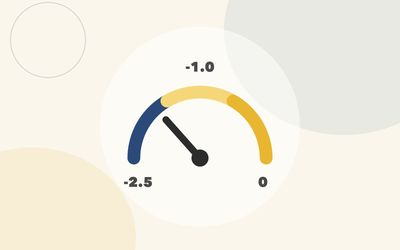
Your T-score compares your bone density to a healthy 30-year-old of the same sex. That's it. It's a comparison, not a grade. The World Health Organization set the brackets:
- -1.0 or higher: normal bone density
- between -1.0 and -2.5: osteopenia (low bone mass)
- -2.5 or lower: osteoporosis
Remember the scale is negative, so -2.5 is worse than -1.0. If you want the full plain-English walkthrough, read Understanding Your DEXA T-Score.
Your Z-score compares you to other people your own age and sex. And here's where we part ways with how most reports get read.
Why we don't chase your Z-scoreYour Z-score tells you how you stack up against other people your age, and that is not the goal. Being "average for 65" isn't a target worth reaching, because the average 65-year-old is losing bone. The T-score is the number to move, because it measures you against young, healthy, strong bone: the destination. (One exception: a Z-score that's very low, below -2.0, can flag an underlying medical cause worth investigating. Note it, then get back to your T-score.)
The one rule almost nobody tells you: same machine, every time
This is the rule that separates a scan you can trust from one that quietly misleads you.
Different DEXA machines are not interchangeable. Manufacturers use different hardware, different reference databases, and different statistical calculations to produce your bone mineral density and your T-score. Two machines can scan the same person on the same afternoon and hand back different numbers, not because your skeleton changed, but because the machines did the math differently.
So if your baseline scan was on one machine and your follow-up is on another, you may be measuring the gap between two devices instead of a real change in your bones. That's not apples to apples. That's apples to oranges, dressed up as progress or panic.
The single most important takeawayTo know whether your bones truly changed, remove the machine as a variable. Always rescan on the same DEXA machine, and ideally with the same technician, positioning you the same way and scanning the same region. Same machine, same tech, same spot. That's how a follow-up scan becomes real evidence instead of a coin flip.
The pro move: bring your old scan, images and all
Want to make your two scans genuinely comparable? Do what almost no one thinks to do:
Bring your previous DEXA to your appointment, including the images, not just the summary page. Hand it to the technician and ask them to:
- Confirm you're on the same machine as last time.
- Match the exact region of interest your prior scan measured (the same vertebrae, the same hip region).
- Reproduce the same positioning so the comparison is clean.
A technician working from your prior images can line the new scan up against the old one instead of guessing. This one habit does more for the accuracy of your tracking than anything else you can control. It turns "close enough" into a true apples-to-apples measurement.
What "LSC" means, and why it keeps you sane
Sooner or later you'll hear the term least significant change (LSC). It sounds technical. It's actually the thing that keeps you from celebrating noise or panicking over it.
Every DEXA has a little built-in wobble from positioning and calibration. LSC is the smallest change a given machine and facility can reliably call real rather than random. If your follow-up moved less than the LSC, it might just be noise. If it moved more, it's much more likely to be a true change in your bones.
Good bone density centers know their own LSC and compare your follow-ups on the same machine, which is, again, exactly why we keep hammering the same-machine rule. LSC only works when the two scans came from the same device.
How to use LSCDon't over-read a tiny change. A move smaller than your facility's LSC isn't a win or a loss, it's the machine breathing. Ask your DEXA center what their LSC is, and judge every follow-up against it. Real change clears the bar. Noise doesn't.
Before you track forward, trend backward first
Here's the step that changes how you read every future scan: before you judge your progress, figure out how fast you were already losing.
If you have older DEXA scans, look at the trend. How much bone did you lose per year before you changed anything? That number, your personal loss rate, is your real baseline. It's not zero. Bone loss after menopause is a moving walkway heading the wrong way, and "holding steady" against it is already a win.
This is where most people badly undercount their own results. Watch:
The math that changes everythingSay your old scans show you were losing about 4% a year. Left alone, next year's scan should have read roughly -4%. Instead, after a year of weekly osteogenic loading, your same-machine follow-up comes back +4%. The printout says "+4%." The truth is bigger: you erased a 4% loss and added 4% on top. Measured against the trajectory you were actually on, that's an 8-point swing. Huge, and completely invisible if you only read the single follow-up number.
That's why trending your loss first isn't optional bookkeeping. It's the difference between "meh, +4%" and "I just reversed a decade-long slide." Stopping the loss is the turnaround; the gain on top is the reward. We wrote a whole piece on that momentum: what happens after your first year, and why you shouldn't stop now.
Your destination: normal bone density
Think of your bone health like a road trip. You need two things: a destination, and a way to know you're actually getting closer.
The destination is normal bone density. Picture it as Cape Cod at the end of a 1,900-mile drive, the place on the map you're driving toward. Where you start just tells us how long the drive is. If you're starting in osteoporosis, you've got more road ahead. If you're in osteopenia, you're closer than you think. Either way, the route is the same: consistent osteogenic loading, week after week, moving your T-score back toward young, healthy bone.
Your DEXA is the GPS. It's how you confirm you're not just driving, but arriving. And when you read it right, same machine, T-score first, trended against your old loss rate, it stops being a source of anxiety and becomes the proof that you're on the road home.
That's the track record we build toward: 8 out of 10 members who follow our protocol see positive improvements in bone density on their next DEXA. Get scanned correctly, read it correctly, and you'll be able to see it for yourself.
Your simple plan from here
- Get scanned - on a machine you can go back to. Pick a DEXA facility you can return to for every follow-up. If you need help finding one, we have a physician partner who can point you in the right direction.
- Bring your last scan, images and all. Hand the technician your prior report so they scan the exact same region on the exact same machine. That's what makes the comparison real.
- Book your free Bone Health Roadmap Call. A coach will read your DEXA with you, trend your loss, and map the route to your destination: normal bone density.
Frequently asked questions
Where can I get a DEXA scan in Austin?
DEXA (dual-energy X-ray absorptiometry) scans in the Austin area are available through hospital radiology departments, imaging centers, and many OB-GYN and endocrinology practices. The more important question isn't just where, but where you can return to: for tracking bone density over time, you want a facility you can go back to so every scan is on the same machine. OsteoStrong does not perform DEXA scans, but if you're not sure where to go, we have a physician partner who can help point you in the right direction. Ask on a free Bone Health Roadmap Call.
What is the difference between a T-score and a Z-score on a DEXA scan?
Your T-score compares your bone density to that of a healthy 30-year-old of the same sex, which is the peak-density benchmark used to diagnose osteopenia and osteoporosis. Your Z-score compares you to other people your own age and sex. For tracking your progress, the T-score is the number that matters, because your goal is to move back toward young, healthy bone, not to be average for your age. A Z-score that's very low (below -2.0) can be a useful flag for an underlying medical cause, so it's worth a look, but it is not the target you're trying to move.
Why do I need to use the same DEXA machine every time?
Different DEXA machines use different hardware and different manufacturer reference databases, and they run different statistical calculations to produce your bone mineral density and T-score. That means a scan on one machine and a scan on another are not directly comparable, even for the same person on the same day. To know whether your bones truly changed, you have to remove the machine as a variable: same machine, and ideally the same technician positioning you the same way and scanning the same region. Otherwise you may be measuring the difference between two devices, not a difference in your skeleton.
What is least significant change (LSC) on a DEXA scan?
Least significant change is the smallest difference between two scans that a given machine and facility can reliably call a real change rather than measurement noise. Every DEXA has a small amount of variability from positioning and calibration. If your follow-up change is smaller than the LSC, it may be noise; if it's larger, it's more likely a true change. Good bone density centers know their LSC and compare follow-up scans on the same machine, which is exactly why we tell members to keep their DEXA at the same facility.
Should I bring my old DEXA scan to my next appointment?
Yes, and bring the images, not just the summary page. Hand the technician your prior scan so they can match the exact region of interest and positioning, and confirm you're on the same machine. This is the single best thing you can do to make your two scans genuinely comparable. It turns a rough guess into an apples-to-apples measurement of whether your bone density actually moved.
How do I know if my bone density gain is real?
First, trend your history: look at your older scans to see how much bone you were losing per year before you changed anything. That loss rate is your baseline trajectory. Then compare your follow-up scan (same machine) against both your last number and your prior trend. A change bigger than your facility's least significant change (LSC) is real, and it's even more meaningful when you consider that you also stopped the annual loss you'd been running. Stopping a 4%-per-year loss and then adding gain on top is a much bigger swing than the follow-up number alone suggests.
Does OsteoStrong perform DEXA scans?
No. OsteoStrong is a bone-strengthening center, not an imaging facility, so we don't run DEXA scans in-house. Your DEXA stays your independent, third-party check on whether your skeleton is responding. What we do is help you read it, trend it, and use it: on a free Bone Health Roadmap Call a certified coach reviews your report, and if you need help finding a scan, our physician partner can point you in the right direction.