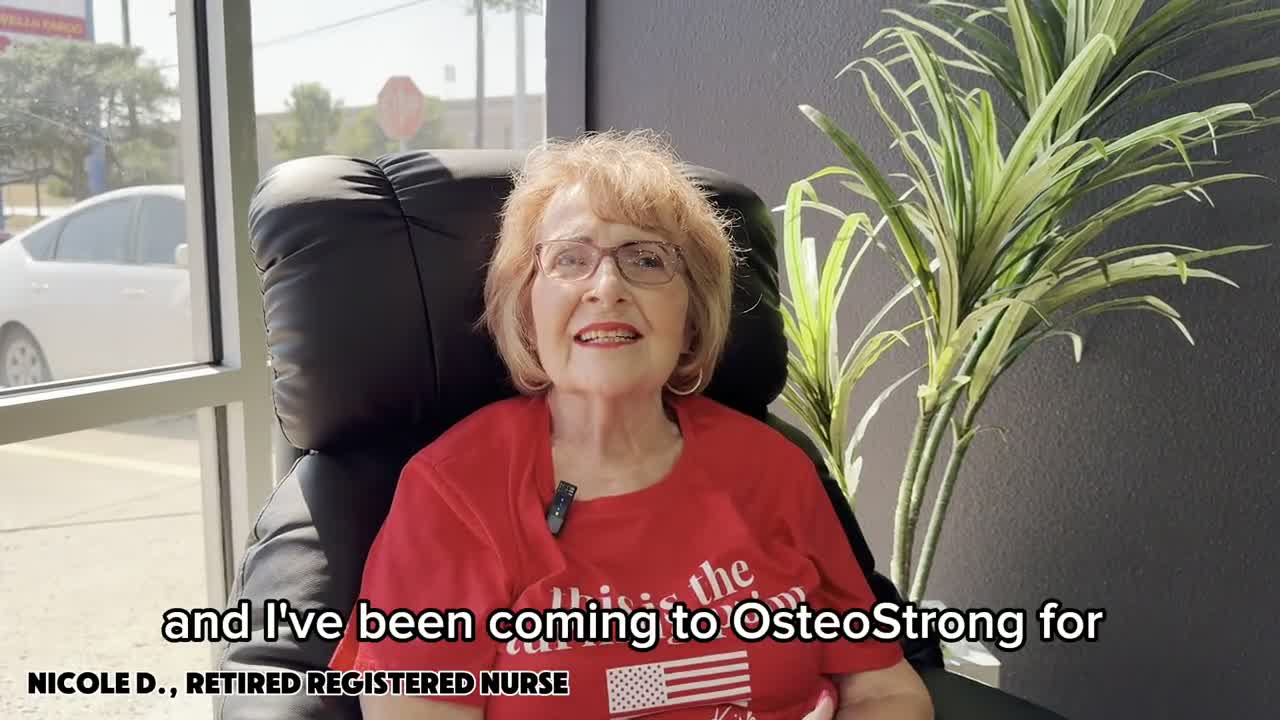
Hearing 'osteoporosis' can feel like a verdict. It wasn't for Nicole, and it doesn't have to be for you.
Before OsteoStrong
Nicole is an Austin woman in her 60s who had been living with an osteoporosis diagnosis. Like many women, she didn't love the idea of being dependent on medication forever and didn't know what else she could actually do to move her DEXA in the right direction.
The diagnosis, and what it felt like
The word 'osteoporosis' is the kind of diagnosis that sits on your shoulders. It reframes how you think about stairs, curbs, grandkids, and travel. Nicole wanted proof that something was working before she accepted the verdict.
What she tried, and why she chose OsteoStrong
Nicole looked for options beyond 'take the pill and hope.' Most exercise programs weren't built for someone trying to measurably rebuild bone. OsteoStrong was different because it had a way to measure whether the work was actually doing anything.
More than 100 Austin-area physicians refer patients to OsteoStrong. 8 out of 10 members who follow the weekly protocol see measurable bone density improvements on follow-up DEXA.
The plan she followed
- Book a free Bone Health Roadmap Call. Fifteen minutes by phone or Zoom. We read your DEXA with you and listen. No pressure.
- Come in for a guided first session. A certified coach walks you through four supported devices in street clothes. Never rushed, never unsafe.
- Track your force output week after week. Fifteen minutes, once a week. Your numbers rise. Your balance returns. Your next DEXA tells the real story.
The weekly rhythm
For three years, in her words 'three years and three years in one month', Nicole came in weekly. After fifteen months she asked for a follow-up DEXA, not to prove OsteoStrong worked, but to see whether it really did.
The outcome
Her spine was no longer osteoporotic. Her spine density had improved by 12.8%, her hip by 10.5%, and her femoral neck by 8.8%.