It is not too late to treat osteoporosis at 75. Bone still responds to mechanical load above a threshold, medications still reduce fracture risk in older adults, and balance and reaction time remain trainable into the 80s. What changes at 75 is the priority order: fall risk becomes the main event, because about 1 in 3 adults over 65 falls each year and most fractures start with a fall. The best plan at this age trains bone and balance in the same session, with a coach beside you, and pairs with whatever your physician prescribes. That is exactly what members in their 70s and 80s do every week at OsteoStrong Austin and Georgetown.
No, it is not too late to treat osteoporosis at 75
Somewhere along the way, a lot of women over 75 absorb a quiet message: the goal now is to slow the decline. Not to get better. Just to lose ground more politely.
We want to say clearly that this is not what the biology says, and it is not what we see. Bone is living tissue that remodels for as long as you are alive. The cells that build it respond to strain at 75 the same way they did at 45, and the balance reflexes that keep a trip from becoming a fall are trainable at any age. What changes at 75 is not whether treatment works. It is which parts of treatment matter most.
We have written about whether age itself is a barrier in starting OsteoStrong at 60, 70, or 80 and about the mechanism in can you really rebuild bone after 60. This article is about what is different at 75 and beyond, and how to build the plan around it.
Why fall risk becomes the main event after 75
A T-score describes how much force your bone can take. A fall is where that force comes from. After 75, the second half of that sentence starts to dominate.
The CDC reports that about 1 in 3 adults over 65 falls each year, and the odds rise with every year after that. Most osteoporotic fractures of the hip, wrist, and upper arm begin with a fall from standing height. Bone density decides how much damage the fall does. Balance, strength, and reaction time decide whether the fall happens at all.
That reframes the treatment question. A medication that improves bone density lowers the damage from a fall but does nothing about the fall itself. A plan that also trains the reflex that catches you attacks the risk from both ends. You cannot change your age, which is the largest fixed input in your FRAX score. You can change your fall risk, and that is the lever with the most room to move at 75. Our guide to fall prevention that actually works covers the research behind it.
Are balance and reaction time still trainable at 75?
Yes, and this is the most under-told part of the story.
Balance is two things. One is leg and hip strength, which decides whether you can stop your body once it starts to tip. The other is the speed of the reflex loop between your feet, your inner ear, and the muscles that respond, which decides whether the correction arrives in time. Both respond to training well into the 80s. Strength responds to load. Reflex speed responds to a surface that keeps moving underneath you, which is what a vibration plate does, and why it is part of every session at our centers.
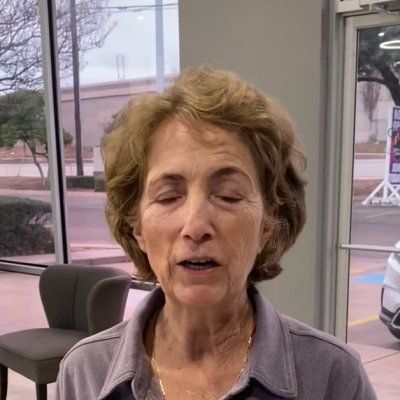
Claudia: the fall that did not happen
Caught herself when her foot caught on the stairs
Claudia is in her 70s. The moment that convinced her the training was working happened at home, on the stairs, not on a device.
"I slipped on the stairs and I caught myself. Before OsteoStrong, that would have been a fall."
Verbatim from Claudia's on-camera testimonial. Full case study.
Is osteogenic loading safe at 75?
This is the question underneath most of the others, so here is exactly what a session involves.
You sit or stand at one of four devices, in street clothes, with a coach beside you. You press against the device in your strongest range of motion, for a few seconds, at a force you choose. The device measures how much force your skeleton produced. There is nothing to lift, nothing overhead, nothing dropped, no jumping, and no impact. The load is high, because bone needs load above roughly 4.2 times body weight to adapt (Deere et al., 2012), but it is generated by you, in the joint position where you are strongest, and it stops the instant you stop pushing.
That is why it works for people who cannot safely train with barbells. A barbell is capped by the weakest point in your range of motion, and at 75 that weak point may be a hip or a shoulder you have been protecting for years. Osteogenic loading skips it entirely. Our session protocols are reviewed on an ongoing basis with the physicians who refer to us, and more than 100 Austin-area physicians do. The how it works page shows each device, and what a 15-minute session actually feels like walks through it from a first-timer's chair.
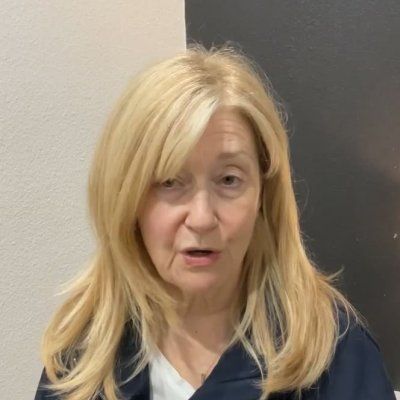
Virginia: from a wheelchair to standing straight
Four years in a wheelchair; now walking unassisted and standing straight
Virginia is a long-term member who came to us with a DEXA T-score of -4 and four years in a wheelchair behind her. If loading were unsafe for fragile bone, she would be the member it failed. Instead she walks into her sessions.
"Two years ago I had a negative four DEXA. I was in a wheelchair for four years. Today I'm standing up straight."
Verbatim from Virginia's on-camera testimonial. Full case study.
Medication considerations later in life
Medication remains a real option at 75, and for many women the right one. Fracture reduction from the major drug classes holds up in older adults, which is the whole point of treating. What changes is the weighing.
Physicians pay closer attention to kidney function, which affects which bisphosphonates are appropriate. They ask about dental work planned, because of the rare jaw risk with antiresorptives. They ask about swallowing and reflux, because oral bisphosphonates can irritate the esophagus. They count your other prescriptions. And they think about adherence: a once-yearly infusion or a twice-yearly injection may fit a life at 75 better than a weekly tablet with fussy instructions.
Two things to hold onto. If Prolia is part of your plan, it must never be stopped without a physician's exit plan, because rebound bone loss and vertebral fractures are well documented when it lapses. And every decision to start, continue, or change a medication belongs to you and your physician. Our plain-English medications guide explains each class so that conversation is a real one.
What bone can still do in your 70s and 80s
The model that explains bone adaptation, Frost's mechanostat, has no age term in it. Bone that experiences strain above a threshold adds density. Bone that does not, loses it. Age changes how much material you start with and how fast remodeling runs, not whether the response exists.
Among OsteoStrong members who follow the weekly protocol and complete a follow-up DEXA, 8 out of 10 see measurable improvement, and consistency and starting point are the biggest factors. Member DEXAs are performed by independent imaging providers, not by OsteoStrong, and we encourage every member to rescan on schedule.

Diane: the first improvement in many years
Spine +5% on her most recent DEXA, the first improvement in many years
Diane is in her 70s. Years of follow-up scans had told the same story until the most recent one.
"My spine improved by 5%, the first time in many, many years I saw that great of an improvement. My doctor was over the moon."
Verbatim from Diane's on-camera testimonial. Full case study.
What a first session at 75 looks like
You arrive in whatever you are wearing. A coach walks you through the four devices, sets each one to your body, and asks you to press against it. Most first-timers are surprised by two things: how little time it takes, and how much force they can produce when the position is right. Your numbers from that first session become your baseline, and you watch them climb week by week from there.
If pain is what has kept you from moving, ask about LIMFA therapy at our Georgetown center. Marilyn, a Georgetown member in her 70s, walked in limping with hip and shoulder pain and was not limping after one session; her story and others are in years of pain, gone. Our Georgetown bone density program page covers everything offered there, and the free fall and balance checklist is a good thing to bring.
The bottom line
Seventy-five is not the age when treatment stops working. It is the age when fall prevention moves to the front of the plan, and fall prevention is trainable. Bone still adapts to load, medication still reduces fracture risk, and balance and reaction time still improve with the right stimulus. The members in this article are in their 70s and 80s, and the thing they have in common is that they started.
Want to know where osteogenic loading fits in your plan? Book a free Bone Health Roadmap Call, bring your DEXA, and we will walk through it with you.
Full case studies referenced in this article
- Claudia: caught herself on the stairs, reflexes trained in her 70s
- Virginia: T-score -4 at baseline, from a wheelchair to standing straight
- Diane: spine +5%, the first improvement in many years
- Marilyn: walked in limping, not limping after one LIMFA session
Browse the full case studies hub or read the verification standard behind every number above.
This article is for general education and is not medical advice. Talk to your own doctor before starting, stopping, or changing any medication, supplement, or exercise program, especially if you have a diagnosis of osteopenia or osteoporosis.
Your simple plan from here
- Book your free Bone Health Call. 15 minutes, phone or Zoom, no pressure.
- Come in for a guided first session. A coach walks you through all four devices.
- Track your strength week after week. 15 minutes, once a week. The numbers rise.
Frequently asked questions
Is it too late to treat osteoporosis at 75?
No. Bone responds to mechanical load above a threshold at every age, medications reduce fracture risk in older adults, and balance and reaction time remain trainable well into the 80s. What changes at 75 is the priority order: fall risk becomes the main event, because about 1 in 3 adults over 65 falls each year and most fractures start with a fall. A plan that trains bone and balance together is the one that matters most now.
Can you improve bone density at 75?
Yes. The cells that build bone never stop responding to strain, which is why members in their 70s and 80s post DEXA gains. Diane, an Austin member in her 70s, saw a 5 percent spine improvement, the first in many years. Among OsteoStrong members who follow the weekly protocol and complete a follow-up DEXA, 8 out of 10 see measurable improvement, with consistency and starting point the biggest factors. See more on our results page.
What is the safest osteoporosis treatment for someone over 75?
Safety later in life depends on kidney function, dental health, swallowing, and how many other medications you take, which is why the medication choice belongs to you and your physician. Osteogenic loading has no drug interactions and no impact: you press against a device in your strongest range of motion with a coach beside you, and the device measures your force rather than asking you to lift a weight. It pairs with any medication your physician chooses.
Can balance really improve after 75?
Yes. Balance is partly muscle strength and partly the speed of the reflex loop between your feet, your inner ear, and your legs, and both are trainable at any age. Claudia, an Austin member in her 70s, caught herself when her foot caught on the stairs, something she says would have been a fall before she started. Reaction time trained on a vibration plate and strength built under load are the two ingredients.
Is OsteoStrong safe for someone who is 75 or 80?
Yes, and members in their 70s and 80s are a large part of our Austin and Georgetown communities. Sessions are about 15 minutes once a week, in street clothes, on four devices, with a coach beside you the whole time. There is nothing to lift, drop, or jump. Virginia, a long-term member, came to us after four years in a wheelchair and now walks in unassisted. Our session protocols are reviewed on an ongoing basis with the physicians who refer to us.
Should a 75-year-old take osteoporosis medication?
That decision belongs to you and your physician, and it depends on your T-score, FRAX, fracture history, kidney function, and other medications. Fracture reduction from medication remains meaningful in older adults, and physicians weigh that against side effects and the practicalities of each drug. If Prolia is part of the plan, it must never be stopped without a physician's exit plan, because rebound bone loss is well documented.