For Women Over 50 · Austin & Georgetown

Drug-Free Osteoporosis Treatment Alternative in Austin. Stronger Bones. Life On Your Terms.

If you’re a woman over 50 who has been told your bones are thinning, you might be lying awake asking, “What happens if I fall?” We’re OsteoStrong Austin and Georgetown, and helping women like you answer that question is what we do every day.

We know how scary it is to hear “osteoporosis” and feel like no one has time to walk you through what to actually do next. You don’t have to figure this out alone.

Key facts

OsteoStrong Austin and Georgetown provide a drug-free osteoporosis treatment alternative for women over 50 in the Austin, TX metro: one coached 15-minute osteogenic loading session a week, working alongside your physician’s plan. More than 100 Austin-area physicians refer patients here, and 8 out of 10 members who follow the protocol see measurable bone density improvement on follow-up DEXA scans. The first step is a free Bone Health Call.

You need a guide, not another brochure.

We’ve walked hundreds of women in Austin and Georgetown through an osteoporosis diagnosis with a clear, simple plan. A certified coach stands beside you every single session, so you never feel lost, rushed, or unsafe. More than 100 Austin-area physicians refer their patients to us, and 8 out of 10 of our members see measurable bone density improvements on their follow-up DEXA.

You keep your doctor. You keep your medication, if you’re on one. We add the missing piece: the mechanical signal your bones need to respond, delivered in 15 minutes a week, in street clothes.

Your Simple Plan to Support Stronger Bones

Three steps. No pressure. No medication required.

  1. Book your free Bone Health Call

    Fifteen minutes, phone or Zoom, no pressure. We'll read your DEXA with you and listen.

  2. Come in for a guided first session

    A certified coach walks you through four supported devices. You'll never feel lost or unsafe.

  3. Track your strength week after week

    Fifteen minutes, once a week. Your numbers rise. Your balance returns. Your confidence comes back.

The Basics

What is osteoporosis, and why does it matter for women over 50?

Osteoporosis is a condition where bones lose density and become fragile, raising the risk of fractures from minor falls or even everyday movements like lifting a grandchild or stepping off a curb.

It is most common in women over 50, and the risk rises sharply after menopause because estrogen (which protects bone) drops. Osteopenia, a milder form, is the early warning stage. Both are typically diagnosed with a DEXA bone density scan: a T-score of -1 to -2.5 is osteopenia, and -2.5 or lower is osteoporosis.

Why it matters:

  • 1 in 2 women over 50 will break a bone because of osteoporosis in her lifetime.
  • 40% of hip-fracture patients lose independent living after the break.
  • 24% of hip-fracture patients over 50 die within one year of the fracture.

Source: Bone Health & Osteoporosis Foundation.

Know Your Numbers

When should women over 50 get a DEXA scan?

Most primary-care physicians in Austin can order a DEXA. It is quick, painless, and uses less radiation than a chest x-ray.

The Bone Health and Osteoporosis Foundation recommends a baseline DEXA for:

  • All women at age 65 or older.
  • Postmenopausal women under 65 with one or more risk factors:
  • Family history of osteoporosis or hip fracture
  • Early menopause (before age 45) or surgical menopause
  • Long-term use of steroids, aromatase inhibitors, or certain seizure medications
  • Smoking history or more than 2 alcoholic drinks per day
  • Low body weight or small frame
  • A prior fragility fracture (a break from a standing-height fall)
  • Rheumatoid arthritis, type 1 diabetes, or hyperthyroidism

If you have already had a DEXA, bring your report to your free bone health call. Most of our members share their DEXA with us so we can track the gains session by session.

Your Options

Osteoporosis treatment options in Austin: where OsteoStrong fits.

When a DEXA comes back low, most Austin physicians walk you through the same short list. Here is that list, honestly, including where we fit and where we don’t.

  • Prescription medication. Bisphosphonates like alendronate, or injectables like denosumab, prescribed by your physician, endocrinologist, or rheumatologist. For many women this is the right call, and we will never suggest otherwise.
  • Calcium, vitamin D, and nutrition. The raw materials for bone. Necessary, but on their own they do not signal your body to build.
  • Physical therapy and exercise. Excellent for strength, posture, and fall prevention, though most exercise does not reach the force threshold that triggers new bone growth (more on that below).
  • Osteogenic loading at OsteoStrong. The drug-free piece of the puzzle: a holistic, non-invasive way to give your skeleton the one thing the options above cannot, the mechanical signal that tells bone to rebuild. Not a medication, not a procedure, and designed to work alongside all of the above.

If you are searching for osteoporosis treatment without medication, or a natural complement to the prescription you are already on, this page will show you exactly how that works, and what results our members have verified on their follow-up DEXA scans. Curious what each prescription actually does? Read our plain-English guide to osteoporosis medications.

The Exercise Gap

Why yoga, Pilates, and the gym are not enough for bone density.

Moving is good for you. But most exercise does not move the needle on bone density, because it does not produce the force a 60-year-old skeleton needs to rebuild.

Bone responds to load, not repetition. Walking, swimming, yoga, Pilates, and most gym work keep you mobile and protect your muscles, but they do not come close to the forces required to signal new bone growth. Running and jumping do, but they are also the kind of high-impact movement that many women over 50 cannot safely tolerate, especially after a fracture or with arthritic joints.

That is the gap OsteoStrong fills: the force needed to trigger bone rebuilding, delivered safely and self-directed, so a woman in her 60s or 70s never has to do anything her body cannot control.

The Science

How OsteoStrong triggers new bone growth.

What is osteogenic loading?

Osteogenic loading is a specific kind of force applied to your skeleton that signals your body to rebuild bone. "Osteo" means bone. "Genic" means to create. When bone experiences a load heavy enough to slightly stress it, your body responds by laying down new bone tissue to make that part of the skeleton stronger. This is Wolff's Law, the 130-year-old principle that bone adapts to the forces placed on it.

The challenge has always been producing those forces safely in someone who cannot squat 400 pounds.

Why 4.2 times your body weight matters.

In a landmark study of adults who train with very heavy resistance (Deere et al., cited across the osteogenic-loading literature), researchers found that bone adaptation begins at approximately 4.2 multiples of body weight. Below that threshold, bone is maintained. Above it, bone density begins to rise.

For a 150-pound woman, 4.2x body weight is about 630 pounds of force. She cannot safely produce that with a barbell, a yoga block, or a weight machine.

How we help women safely reach those loads.

Our four Spectrum devices (chest press, core pull, leg press, vertical lift) are robotic force plates, not weights. Instead of lifting a load, you push against a fixed, immovable resistance. The devices measure the force you produce in real time, so you only generate the load your body chooses to generate, and never a pound more. A coach is with you every session to cue posture and ramp you up gradually.

The result: a 72-year-old woman can safely produce 4x to 7x her body weight of force, typically well above her personal osteogenic threshold, in a 15-minute session. No barbells. No impact. No fall risk.

Your First Session

What to expect in a 15-minute OsteoStrong session.

Most new members arrive nervous and leave surprised at how simple it was.

  1. Arrive in street clothes. No gym bag, no change of shoes. Most members come from work or a lunch meeting.
  2. Meet your coach. Before your first device, we walk through your DEXA (if you have one), your health history, and your specific goals.
  3. Learn the four devices. Chest press, core pull, leg press, vertical lift. Your coach positions you on each one and cues your form.
  4. Push, don't lift. You push against fixed resistance for a few seconds. The screen shows the pounds of force you just produced. That's it.
  5. See your numbers. Every session is logged. You see your force output climb from week to week, long before your next DEXA.
  6. You're done in 15 minutes. No sweat. No cardio. No locker room. Back to your day.
Is This For You?

OsteoStrong is built for women over 50 who:

  • Have been diagnosed with osteoporosis or osteopenia.
  • Have a family history of osteoporosis or hip fracture.
  • Are postmenopausal and watching their DEXA numbers trend down.
  • Have had a prior fragility fracture and want to prevent the next one.
  • Have been on long-term steroids or aromatase inhibitors.
  • Feel unsteady on stairs, curbs, or uneven ground.
  • Want a non-drug option to pair with their physician's plan.
  • Want to stay independent and active with grandchildren and travel.
Complement, Not Replacement

How OsteoStrong fits with your doctor's plan.

OsteoStrong is the non-pharmaceutical piece of your physician's osteoporosis plan: it adds the one thing prescriptions can't, the mechanical signal that tells bone to rebuild.

More than 100 Austin-area physicians refer patients to our centers. On your first call, we will ask you to share your DEXA report and your current treatment (if any). If you are on a prescription like alendronate, risedronate, denosumab, or an anabolic, keep taking it. If your doctor has recommended calcium and vitamin D, keep those too. OsteoStrong adds the mechanical signal your bones need to respond to what your doctor is already doing.

Some members, after sustained density gains on DEXA, have worked with their physician to taper or pause their medication. That decision is always between you and your doctor, never between you and us.

The Proof

Real DEXA gains. Real Austin women.

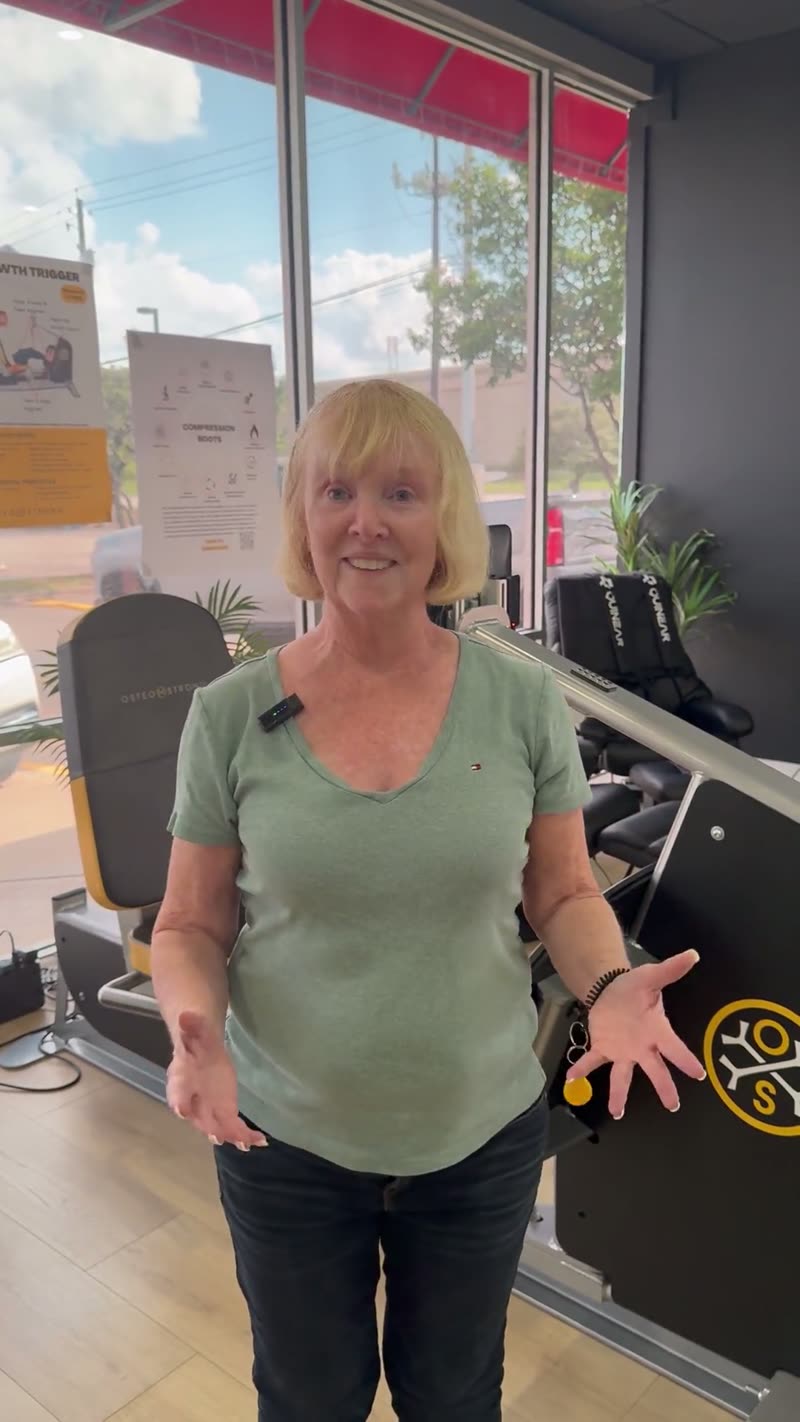
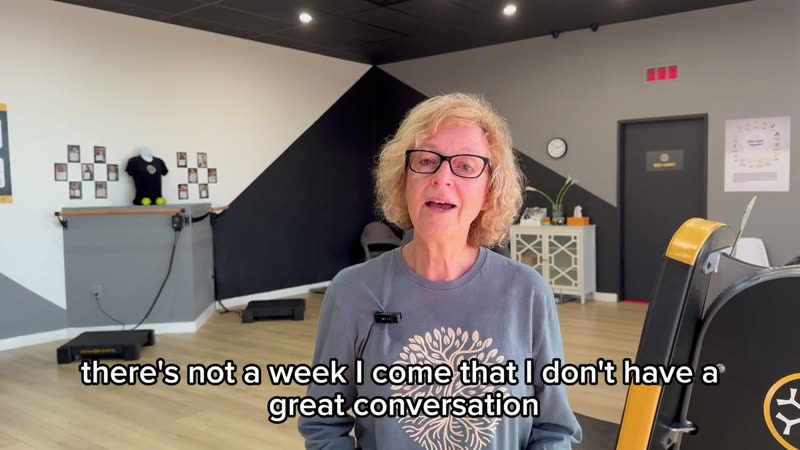
Among members who follow the weekly protocol, 8 out of 10 see measurable bone density improvements on follow-up DEXA scans. Four examples below, in their own words.

Osteoporosis back to osteopenia.

Jane, OsteoStrong Temple TX member: Spine +1.8%, left hip +5.4%, right hip +8.8%
JaneSpine +1.8%, left hip +5.4%, right hip +8.8%
Jane ·66 ·Temple TX 18 months
“I have gone from osteoporosis back to osteopenia. Spine +1.8%, left hip +5.4%, right hip +8.8%.”
JaneTemple TX · 18 months · Spine +1.8%, left hip +5.4%, right hip +8.8%
Read the full transcript

I'm Jane Medlin and I have been a member of OsteoStrong for 18 months. I drive an hour and a half from Temple, Texas to come here every week. I just got my DEXA scan results back and I have gone from osteoporosis back to osteopenia. My spine is up 1.8%, my left hip is up 5.4%, and my right hip is up 8.8%. So I'm thrilled with the results.

Everything improved after years of decline.

Bonnie, OsteoStrong Austin member: Femoral neck +8.7%, everything improved after 3 years
BonnieFemoral neck +8.7%, everything improved after 3 years
Bonnie ·70 ·Austin 3 years
“Every time I've had it, it's always gotten worse. I couldn't believe it. Everything improved.”
BonnieAustin · 3 years · Femoral neck +8.7%, everything improved after 3 years
Read the full transcript

Hi, I'm Bonnie Johnson. And I've been coming to OsteoStrong for about three years now. I just got my bone density scan back and I improved my femoral neck by 8.7%, and everything else improved. Every time I've had it, it's always gotten worse. So when I got this report, I couldn't believe it. Everything improved. So I am so happy. Thanks, OsteoStrong.

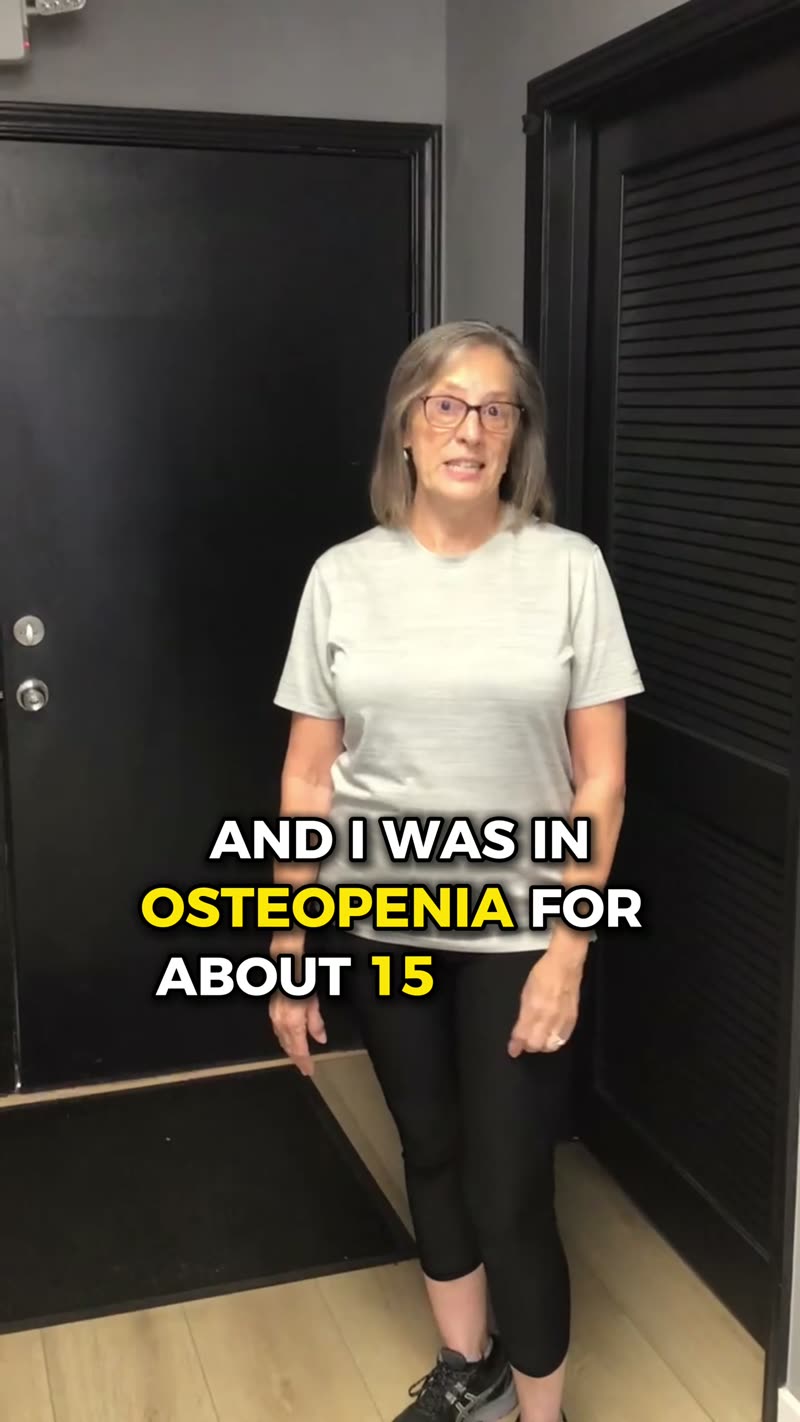
From osteopenia for 15 years to normal.

Marjorie, OsteoStrong Austin member: Bone density now normal after 15 years osteopenia
MarjorieBone density now normal after 15 years osteopenia
Marjorie ·44 ·Austin 18 months
“I didn't think I would ever get to normal. This place works. You got to come work it because it works and you're worth it.”
MarjorieAustin · 18 months · Bone density now normal after 15 years osteopenia
Read the full transcript

Forty-four years old, I started getting bone density tests and my bone density was going down, down, down. I was doing barbell weightlifting, walking a lot, doing the things you're supposed to do for bone density. I went on hormone therapy. None of it was making it stop. A friend told me about OsteoStrong. I've been coming for 18 months. I just had my DEXA and I'm normal. After 15 years of being osteopenic. I didn't think I would ever get to normal. This place works. You got to come work it because it works and you're worth it.

Spine and hip: completely reversed.

Kathleen, OsteoStrong Austin member: Spine and hip: osteoporosis reversed to normal
KathleenSpine and hip: osteoporosis reversed to normal
Kathleen ·68 ·Austin 2.5 years
“In my hip and my spine, I'm completely normal. Thanks to AlgaeCal and OsteoStrong, I feel like a new person.”
KathleenAustin · 2.5 years · Spine and hip: osteoporosis reversed to normal
Read the full transcript

Hi, my name is Kathleen and I'm here today to share the great story with you about two and a half years ago. Well, actually three years ago, I was diagnosed with osteoporosis in my spine, my hip, and my femur. About two and a half years ago, I started AlgaeCal and OsteoStrong. I just got my DEXA results back. In my hip and my spine, I'm completely normal. My femur is osteopenia, but no longer osteoporosis. Thanks to AlgaeCal and OsteoStrong, I feel like a new person and I encourage you to do the same.

These are the women your bones can become. One DEXA at a time. The only difference between them and you is the day they walked in.

A few more verified DEXA outcomes:

  • Nicole, Austin (3 yr). Spine no longer osteoporotic. +12.8% spine, +10.5% hip, +8.8% femoral neck.
  • DeeDee, Georgetown. 19% spine density gain over 18 months.
  • Abby, Austin. +4% spine two years ago, +11% spine on her most recent DEXA.
  • Dora, Austin. Spine +20%, hip +16%. No more osteoporosis.
  • Angie, Austin. Hip +9%. No longer osteoporotic.
  • Kaye, Austin. From osteopenia to normal bone density.
  • Ann St. Clair, Austin. Spine +4.4%, femur +16%, hip +5.5%.
  • Ruth H., Austin. FRAX fracture risk dropped from 57% to 24%.
Honest Expectations

What to expect.

  • Non-pharmaceutical. We do not prescribe or diagnose. We work alongside your physician's plan, and our session protocols are reviewed regularly with the physicians who refer to us.
  • Real timelines. Bone remodeling is slow biology: the typical pattern is halting bone loss in year one and measurable density improvement in year two. Anyone promising gains in six months is selling something bone can't deliver.
  • Not a gym membership. There are no workouts, no cardio equipment, and no locker rooms. One coach, four devices, one 15-minute session a week.
  • Physician-coordinated. If you have a recent acute fracture or certain cardiovascular conditions, we coordinate with your physician before your first session so you start at the right time.
Serving The Austin Metro

Two convenient locations near you.

OsteoStrong Austin (13749 Research Blvd, Suite 1050, near 183 & Anderson Mill) serves Austin, Round Rock, Cedar Park, Leander, and Pflugerville. OsteoStrong Georgetown (900 N Austin Ave, Suite 301) serves Georgetown, Sun City, Liberty Hill, Jarrell, and Hutto.

Imagine if a year from now…

This is the life most of our osteoporosis members describe when we ask them why they stay.

  • You walk into your follow-up DEXA and your doctor says, “Your bones are holding or improving.”
  • You stop white-knuckling the handrail and trust your feet on stairs again.
  • You travel the way you used to. You hike with your grandkids. You get down on the floor and back up.
  • You fall asleep without the voice in your head whispering, what if I break a hip?
  • You stop feeling like a patient, and start feeling like yourself.

What happens from here is up to you.

If you do nothing
  • Bone density continues to thin, quietly, year after year.
  • A simple trip becomes a fracture. A fracture becomes a surgery.
  • You start avoiding stairs, travel, and the grandkids you wanted to keep up with.
  • Your world gets smaller, one careful step at a time.
If you take the next step
  • Your DEXA trend bends upward instead of down.
  • You catch yourself on a stumble instead of hitting the floor.
  • You lift a grandchild, a suitcase, or a bag of mulch and don't think about it.
  • You stay the independent woman you have always been.
Questions Women Ask

Osteoporosis at OsteoStrong: common questions.

No. Keep taking what your doctor prescribed. OsteoStrong isn’t a pharmaceutical: it adds the mechanical bone-loading signal that medication alone doesn’t provide, which is why more than 100 Austin-area physicians refer patients to work with us alongside their prescriptions. Some members, after sustained density gains, have reduced or discontinued medications in consultation with their doctor.

Most members see their rate of bone loss slow or halt within the first year, with measurable density gains typically showing up in year two. We do not promise results in six months. We track your force output every session, so you see progress long before the next DEXA.

Sessions are self-directed. You generate force through a gentle, controlled push against a fixed resistance device, which keeps every load inside your own safe range. A certified coach is with you every session. Many of our Austin and Georgetown members started here after a fracture or a severe DEXA result. If you have recent acute injuries, we will coordinate with your physician before your first session.

A regular gym trains muscles. OsteoStrong trains bone. Research suggests bone rebuilds when it receives roughly 4.2 times your body weight in force, a level you cannot produce safely with free weights or standard machines. Our four spectrum devices let a woman in her 60s produce those forces safely in a 15-minute session, once a week. No cardio, no locker rooms, no workouts.

Yes. Postmenopausal women are the population for whom osteogenic loading has been most studied, and they are the majority of our members. Because the force is self-generated, a postmenopausal woman in her 70s gets the signal her skeleton needs without risking a fall, impact injury, or over-loading a joint.

The Bone Health and Osteoporosis Foundation recommends baseline DEXA for all women at age 65, and earlier (often at menopause) for women with risk factors: family history of osteoporosis, early menopause, smoking history, long-term steroid use, low body weight, or a prior fragility fracture. Ask your physician; most primary-care doctors in Austin can order a DEXA.

For some women, yes: physicians sometimes recommend starting with exercise, nutrition, and fall prevention, especially for osteopenia or milder bone loss. Other women need medication, and that is a decision for you and your doctor. OsteoStrong works either way: it adds the bone-loading stimulus that neither pills nor walking provide, whether or not you are on a prescription.

OsteoStrong is drug-free and non-invasive: you produce the force with your own body, and your skeleton responds the way it was designed to. Many members choose us as the holistic piece of their bone health plan, alongside nutrition, vitamin D, and their physician’s care. We aren’t a pharmaceutical, and we never ask you to stop a medication your doctor prescribed.

OsteoStrong Austin is at 13749 Research Blvd, Suite 1050, Austin, TX 78750, serving Austin, Round Rock, Cedar Park, Leander, and Pflugerville. OsteoStrong Georgetown is at 900 N Austin Ave, Suite 301, Georgetown, TX 78626, serving Georgetown, Sun City, Liberty Hill, and Jarrell.

Further reading for women over 50

Deeper articles that unpack what you just read, with verified member outcomes on each page.

Sources and how we verify what is on this page

Screening guidance, fracture statistics, and DEXA thresholds on this page come from the Bone Health & Osteoporosis Foundation. The 4.2x body weight osteogenic threshold is drawn from the published osteogenic-loading literature (Deere et al.), discussed in more depth in the science behind osteogenic loading.

Every member outcome quoted above is a reported DEXA result from a named member who gave consent, held to a published four-part standard: written or recorded consent, a named source of record for every number, a baseline and follow-up reported with the interval between them, and a claims policy that stops at reported finding rather than medical promise. You can read that standard in full at how we verify member stories.

Content reviewed against our verification standard by the OsteoStrong Austin & Georgetown coaching team, whose session protocols are reviewed regularly with referring physicians · last reviewed April 23, 2026.

Here's Exactly What To Do

Worried about your bones? Do this one thing today.

Click the button below and book your free 15-minute Bone Health Roadmap Call. We’ll answer your questions, review your DEXA if you have one, and tell you whether OsteoStrong is the right fit. No pressure. No gym clothes. Just a clear next step.

Not ready to call yet? Download our free Top 10 Questions guide →

Call Book Free Call